53Qs
Interview Questions
If you are looking for well-versed Okta Interview Questions, this is the blog for you. This article covers the frequently asked Okta interview questions and answers for freshers and experienced learners. By the end of the article, you will become familiar with scenario-based questions, how to prepare for interviews, and the futurescope for Okta professionals.


| Topic Area | Coverage |
| Okta Fundamentals | Latest Okta version, new features, AI capabilities, and core features. |
| Authentication and Identity Management | SSO, MFA, 2FA, IdPs, State token, Okta authentication, and passwordless authentication |
| Authentication Protocols | SAML, SCIM connector, SCIM server, OAuth, and OIDC-enabled LDAP interface |
| Okta APIs and integrations | API token creation, Okta management API, event hooks, inline hooks, and Okta workflows |
| Monitoring and troubleshooting | Tasks page, last logon attributes, and user assignment retrieval |
| User and directory management | Universal directory, attribute mapping, lifecycle management, and Auth0 |
Okta is a cloud-native Identity and Access Management (IAM) platform. It helps you manage user identities securely and control access to applications, devices, and APIs.
Okta is a secure solution for adding authentication and authorization services to applications. You can specify how your users should log in with Okta. When a user attempts to log in, Okta will verify their identity and return the necessary data.
Moreover, it allows you to use SDKs or APIs to connect your apps, add users, set rules, and personalize your sign-in page. You can use Okta’s built-in reports to monitor your services.
The advantages of Okta are:
Okta releases product updates every month with new features and fixes. The latest release is Okta Identity Engine (OIE) 2026.06.3, released in June 2026.
The following are the new features covered in Okta:
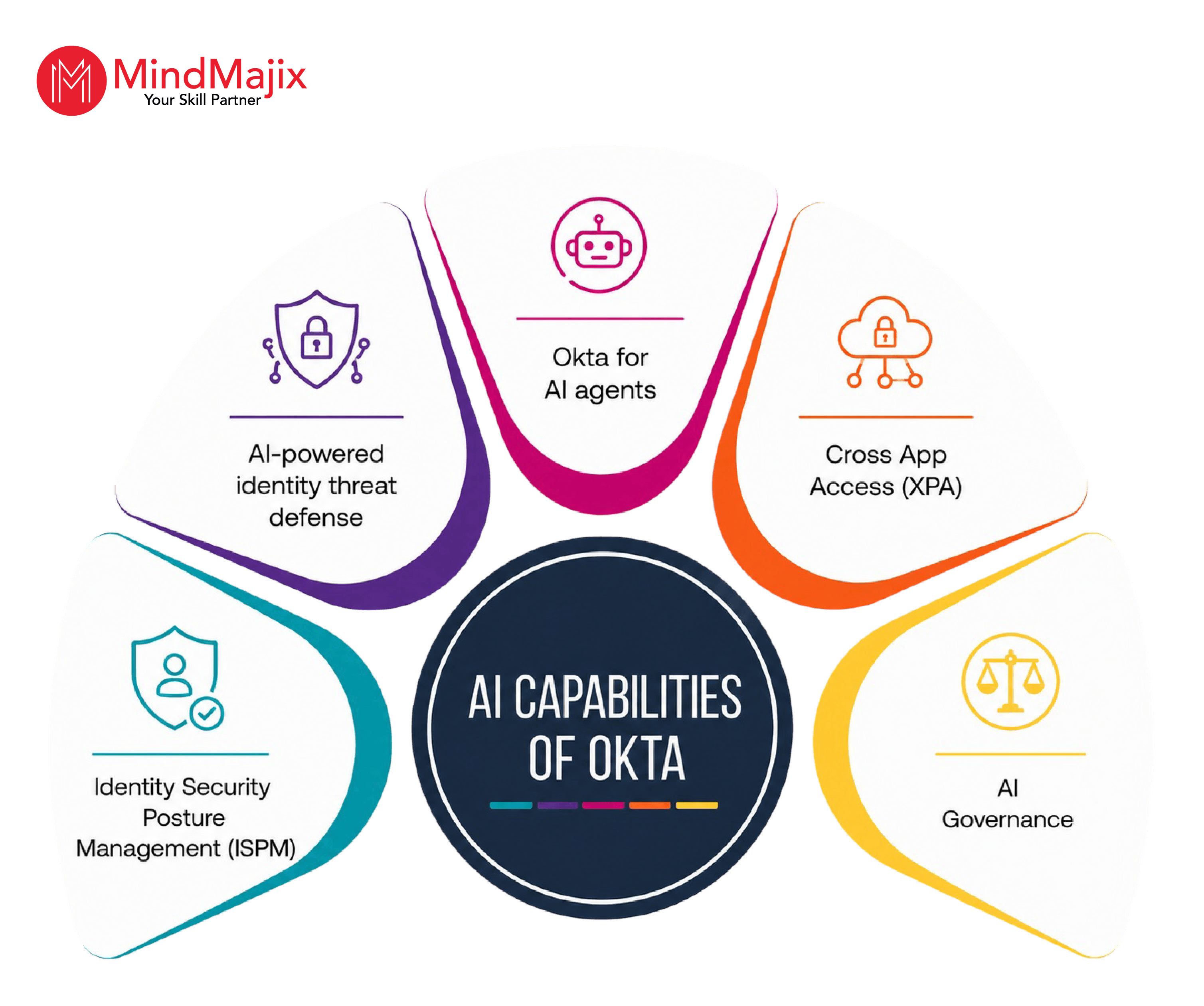
Okta's key AI capabilities are AI agents, AI-powered identity threat defense, ISPM, XPA, and AI governance.
The AI capabilities of Okta are:
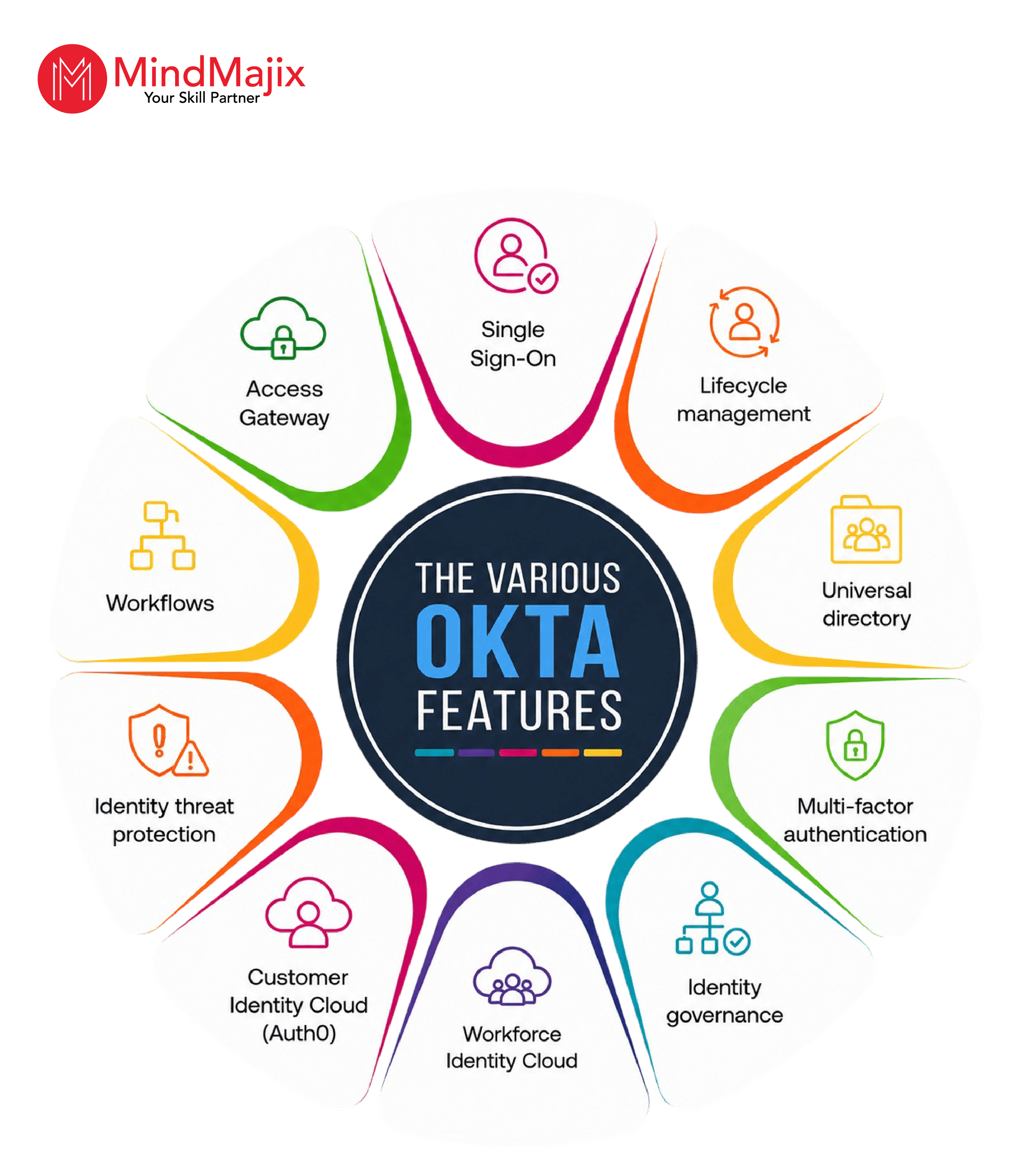
The features of Okta include:
SSO is an authentication method that allows you to access multiple applications with a single login. We only need to remember one password.
SSO method allows you to remember only a few passwords and avoid using weak passwords. It enables IT administrators to grant or revoke user access from a single place.
In MFA, you will use two or more distinct authentication factors. A multi-factor solution can use any combination of authentication techniques.
Generally, MFA combines factors such as knowledge, possession, and inherence. The knowledge factor includes passwords, PINs, or security questions.
Further, the possession factor can be a one-time password, authenticator app, or mobile phone. The inherent factors can be fingerprint, face recognition, and voice recognition.

The benefits of adopting Universal Directory are given as follows:
No, Okta administrators cannot view users' passwords because they are securely hashed.
We can manage user accounts using identity providers.
We can also use IdPs to register with custom applications by validating a social account or smart card, adding Identity Providers within Okta.
Security Assertion Markup Language (SAML) is an XML-based open standard.
You can use SAML to enable SSO between the Identity Provider (IdP) and the Service Provider (SP). In particular, SAML allows a user to access a trusted identity provider. After that, it enables access to multiple applications, eliminating the need for multiple logins.
By using SAML, you can:
2FA is a security method that uses two factors of authentication to verify your identity.
You can access your application or account only after two-step verification succeeds. In a way, it is an extra layer of security beyond your username and password.
The key examples are Okta Verify Push, FIDO2 security keys, biometrics, and SMS OTPs.
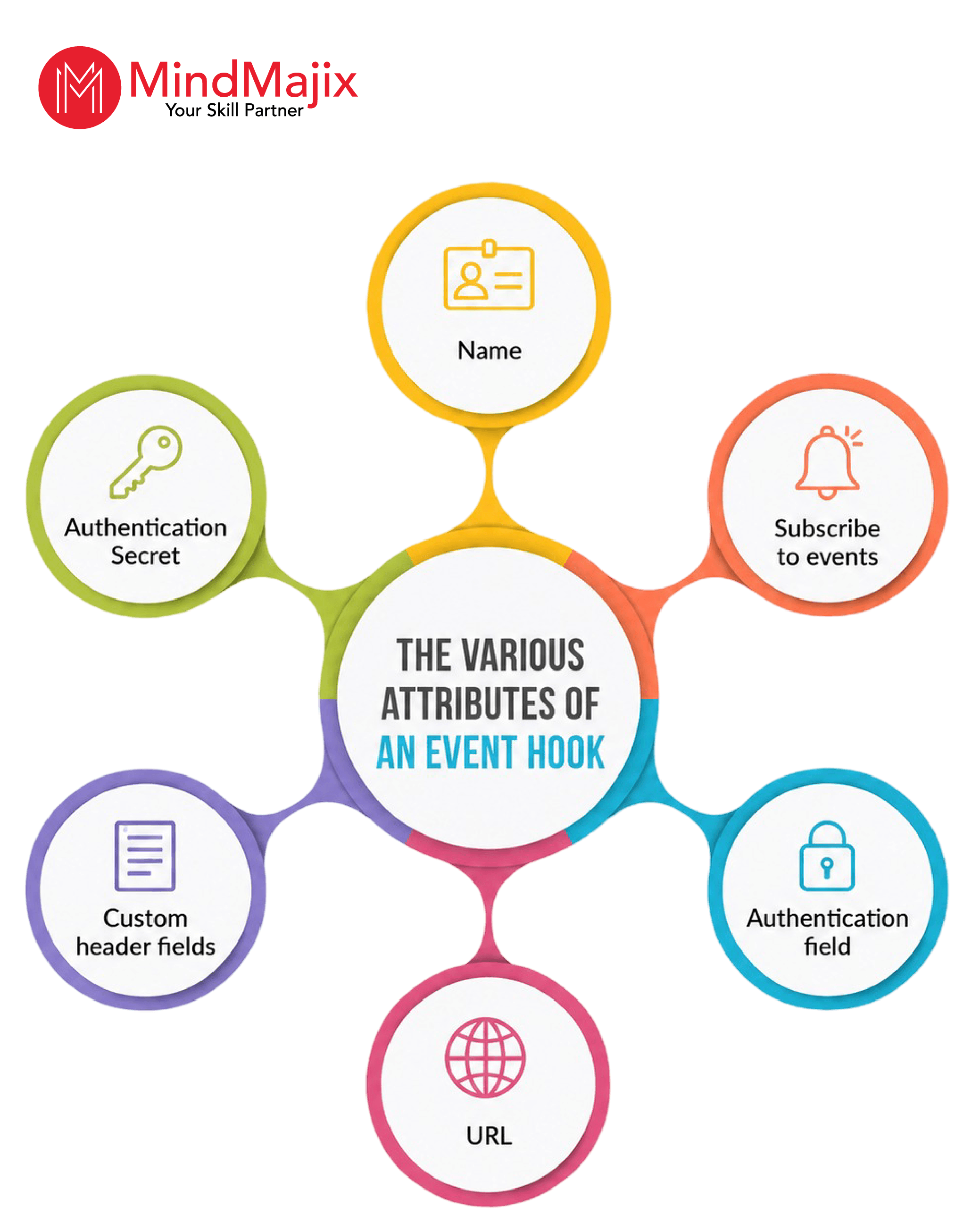
The various attributes of an event hook include the following:
Okta authentication is a process of verifying a user’s identity using Okta’s IAM platform.
Okta authentication enables secure access to applications, systems, and APIs. You can use Okta authentication methods for tasks such as account verification, multi-factor authentication, password recovery, and account unblocking.
There are two distinct types of authentication:
The following are some of the key responsibilities:
SAML authenticates users by exchanging identity information between the identity provider and service provider with SSO.
The identity provider and service provider must exchange user data, including login information, authentication status, IDs, and other key details. This approach simplifies and secures the authentication process.
Whenever a user tries to access a website, the identity provider transmits the SAML assertion to the service provider, which then approves the user's access.
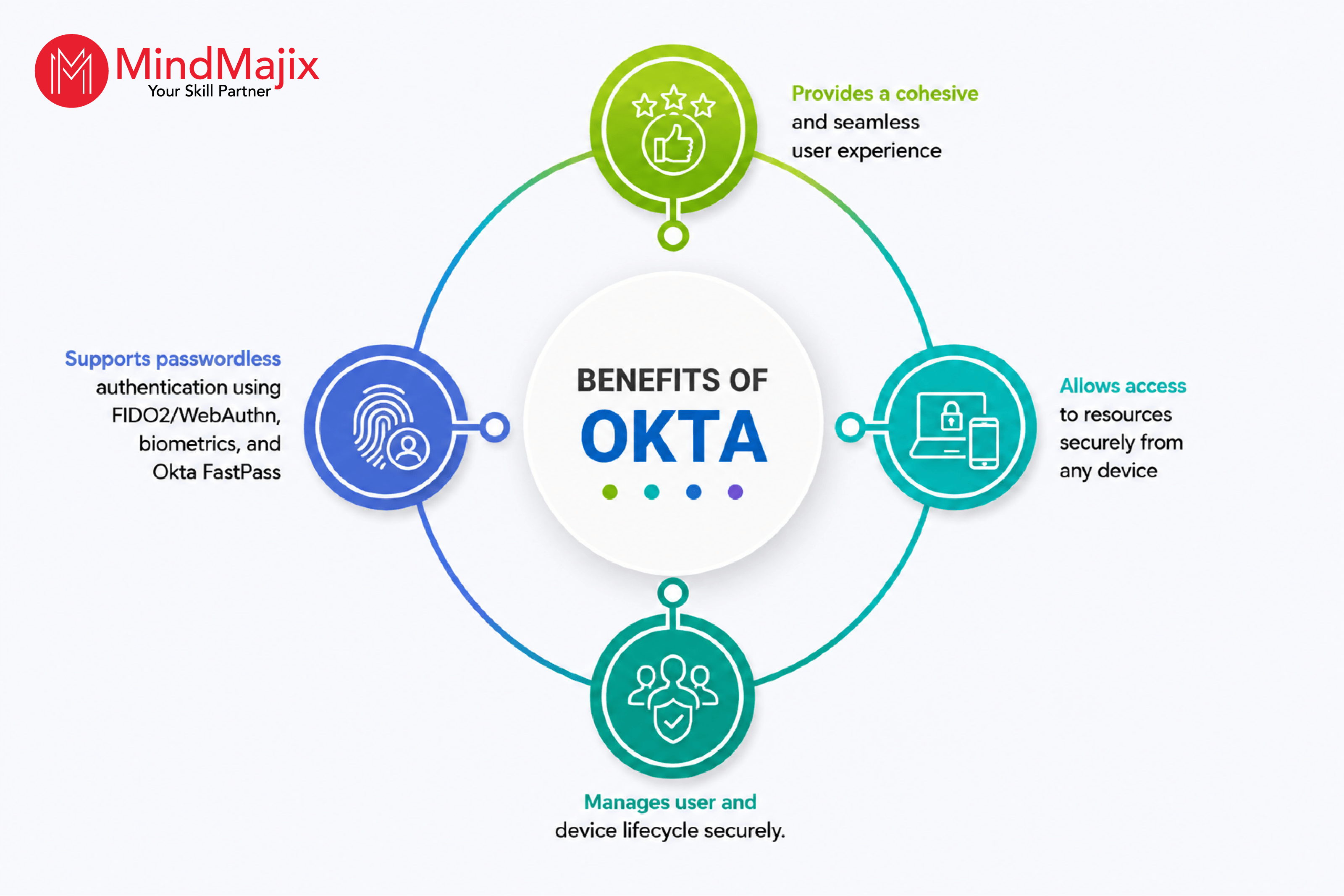
The benefits of Okta are listed below:
SCIM connector provisions users to applications, whereas the SCIM server receives provisioning requests.
SCIM connector plays the client role, whereas SCIM server plays the server role. The connector triggers SCIM API calls. On the other side, the SCIM server receives and processes the API calls.
SCIM connector creates users, deletes groups, deactivates users, and more. On the other hand, the SCIM server creates, updates, and deletes user accounts in applications.
Well! We hope that you have gained a basic understanding of the Okta platform.
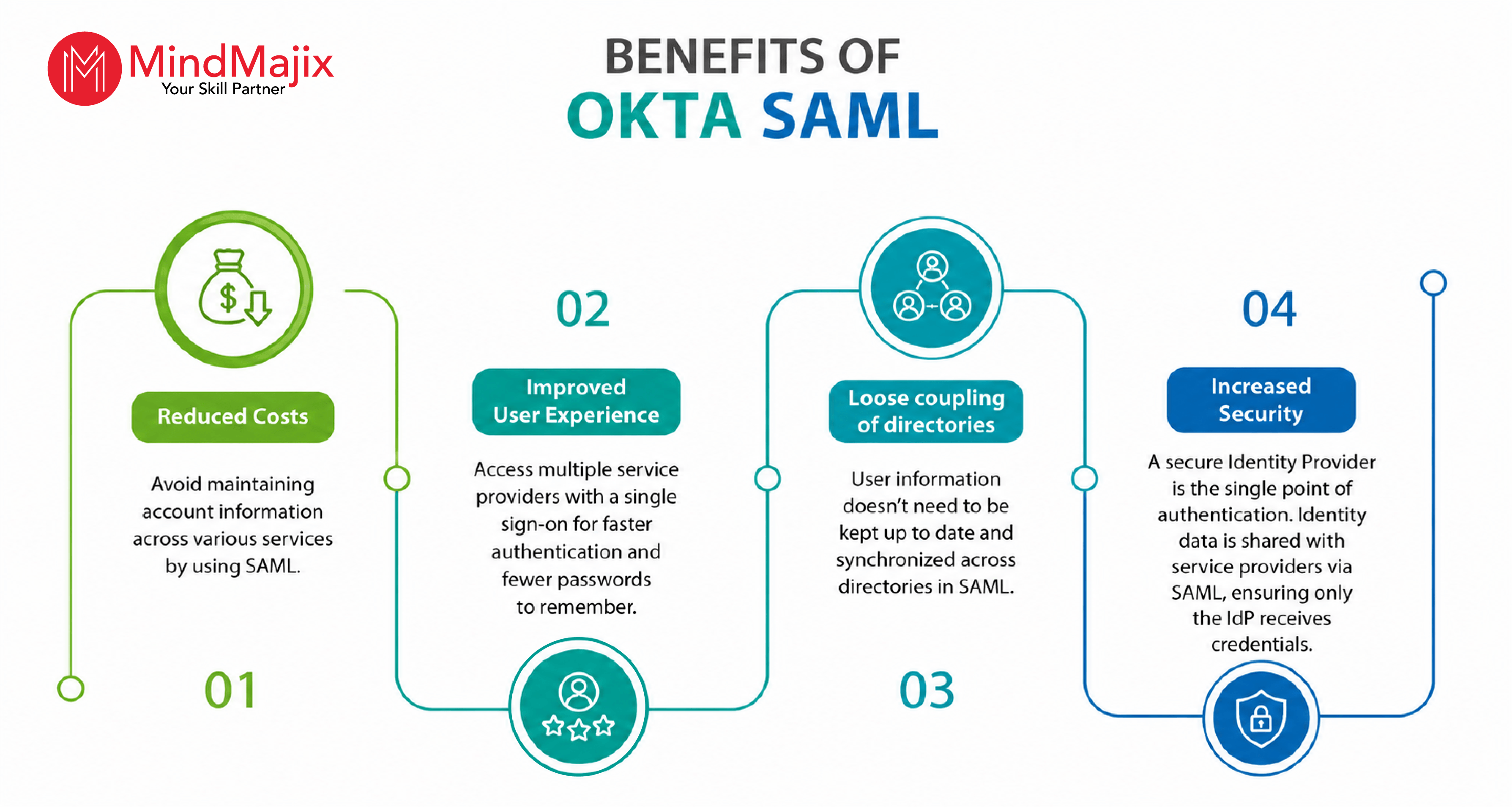
Okta SAML enhances security, reduces costs, and improves user experience, and more.
The three-factor authentication includes biometrics such as:
A state token in Okta is an ephemeral token used to authenticate the current state of a transaction.
Once user authentication is complete, the state token generated during the AuthN process is converted into the session token.
We can use Okta Universal Directory to store employee and customer profiles.
By using the universal directory, you can create a single source of truth. We can further configure user- and app-specific profiles using the profile editor. We can also convert and map features between profiles.
We can create an Okta API token using the Okta Admin Console.
The steps below can help create the Token:
We can add Okta authentication factors in Java by using either the Okta Java SDK or the Okta management API.
The task page contains the Information about the tasks listed in the status area of the dashboard page.
Listed below are a few of the Okta service domains:
Okta’s SSO app integration allows users to log in once and access all their allotted applications without re-entering credentials.
The Okta app integration uses SSO to provide end users with a seamless login process. All end users can open any allocated app integrations after logging in to Okta. It helps access external applications and services without reentering their credentials.
When an Okta user logs in to an Okta group, two AD attributes handle this process. They are:
Yes, MFA can be enabled when a user changes their password. The important thing is that it is controlled by Okta’s authentication policies and authenticator enrollment policies.
If Okta MFA supports multiple factors, users will have the option to choose which factor to use.
The following are a few workflow features:
In Okta, password policies are prioritized according to their order in the policy list. When you attempt to set or change your password, Okta selects the highest priority policy that applies to you from the list.
It is a built-in security assessment tool you can use to analyze the security configuration of your Okta tenant.
You can use Okta HealthInsight to examine security settings, including password policies,sign-on policies, authentication methods, and session security. This tool helps assign tasks to enhance the security posture in an organization’s IT landscape.
Here are the benefits of social authentication.
The system logs identify risks based on the following factors:
You can access applications only on devices verified by the Okta Device Trust solution. Okta's integrated apps help businesses protect their corporate resources by allowing only partners and end users to access them.
Yes, Okta provides many ways to clear the ‘remembered device’ status.
The notification page is where Okta administrators configure and manage emails and notification settings.
The notification page lets admins personalize emails and notifications and view all previously received and deleted notifications. It helps users receive key security and account-related messages.
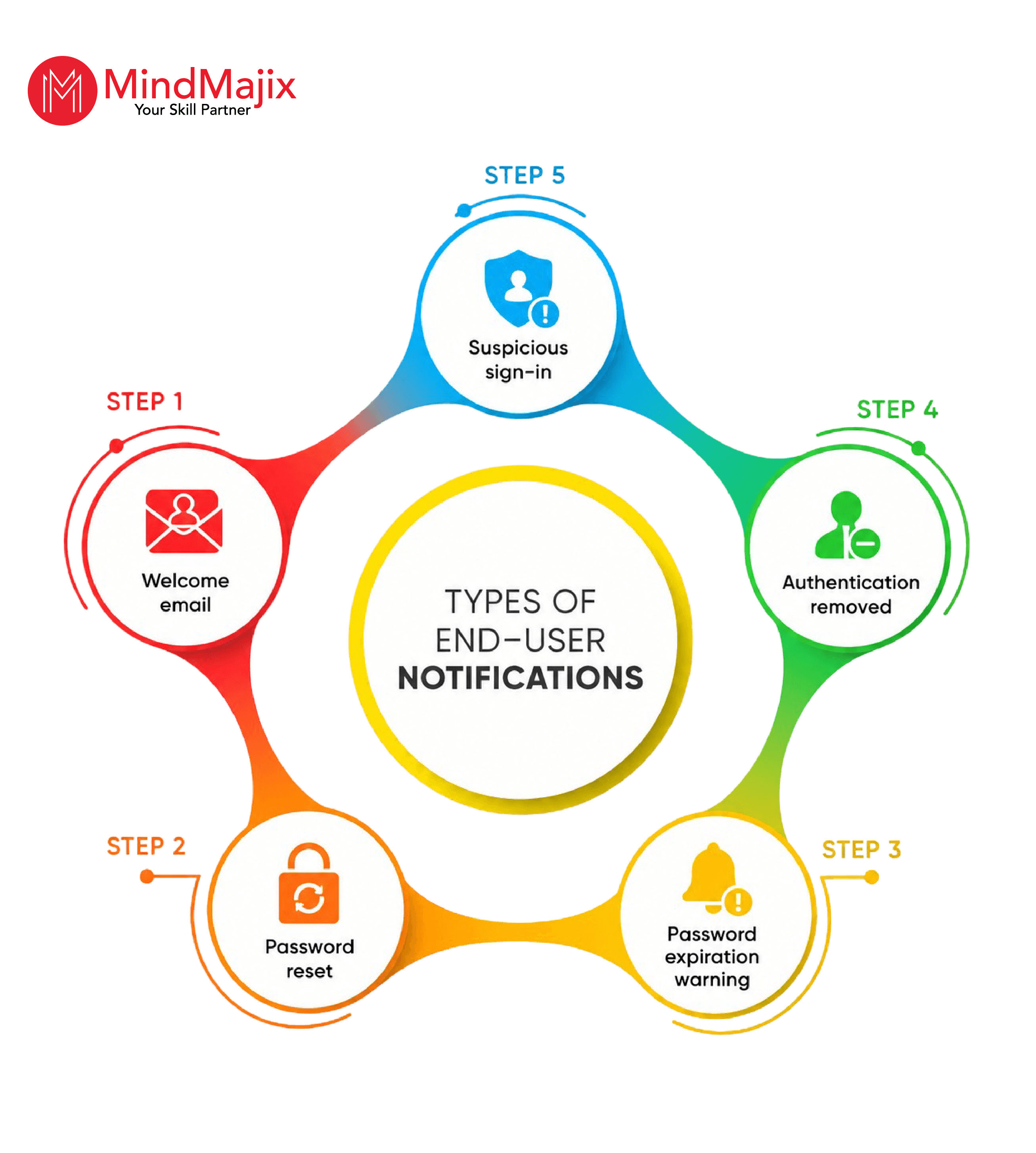
The following are the common types of notifications:
No, Okta does not currently support changing the MFA prompt text.
Yes, Okta integrates well with Google Workspace. The integration supports single sign-on, multifactor authentication (MFA), user lifecycle management, and automated provisioning and deprovisioning.
We should use one of the following methods to obtain a list:
Using delegated authentication, users can log in to Okta with their Active Directory credentials.
The domains used to investigate the certificate revocation are listed below:
We can use the following methods to add users in bulk:
Solution:
You can use the troubleshooting methods listed below one by one until you find the cause of the issue.
Solution:
Follow this step-by-step procedure to complete the migration successfully.
Cause: The Okta user account that attempted to create the API token is not active.
Solution::
Yes, it is easy to start with Okta. If you are familiar with IAM basics, authentication protocols, and user provisioning/deprovisioning, then it will be a great support for your learning.
You can learn Okta in 4 – 5 weeks by choosing MindMajix as your learning partner. You can choose either live online mode or self-paced mode based on your convenience. Additionally, if you need to spend a few hours each day on hands-on practice, you can master the platform in 2–3 months.
They should have the following skills:
What happens in an Okta interview in 2026? What are interviewers' expectations as of now? Let’s explore them in this section.
Recruiters assess your resume and shortlist if your qualifications and experience are relevant to the role.
Some companies conduct online assessments before initiating the interview process. The test will usually be in a multiple-choice format covering the IAM fundamentals, authentication methods, API and policy configuration, and so on.
An HR executive will contact you and ask a few standard questions about your skills, experience, and salary expectations. They will shortlist you if you meet their requirements.
In this initial technical round, the interviewer will ask questions about Okta's architecture, SSO, MFA, Okta workflows, and related topics.
In this crucial technical round, interviewers prefer real-time questions over theoretical assessments. You may expect questions on configuring SSO, diagnosing provisioning failures, bulk importing users from AD, and so on.
This is the special round for senior roles. Interviewers will ask in-depth, real-time questions. They will assess your expertise in Okta Identity Engine (OIE) migration, zero-trust architecture, performance optimization, and related areas.
In this round, HR managers will lead the interview and evaluate your teamwork and collaboration skills. They will ask about salary expectations, notice period, work location preferences, and career goals.
Go deeper with guided training, hands-on exercises, and interview-focused mentorship built for OKTA roles.
 On-Job Support Service
Our work-support plans provide precise options as per your project tasks. Whether you are a newbie or an experienced professional seeking assistance in completing project tasks, we are here with the following plans to meet your custom needs:
| Name | Dates | |
|---|---|---|
| OKTA Training | Oct 27 to Nov 11 | View Details |
| OKTA Training | Oct 31 to Nov 15 | View Details |
| OKTA Training | Nov 03 to Nov 18 | View Details |
| OKTA Training | Nov 07 to Nov 22 | View Details |