- Blue Prism vs Selenium
- Career Scope in Selenium-The Future of Testing
- Essene of Getting Certified in Selenium
- Getting Started With Selenium
- Top 10 Reasons Why You Should Learn Selenium
- Selenium Interview Questions
- Selenium Release History Infographics
- Selenium Tutorial
- Tosca vs Selenium
- Automation Selenium RC using TestNG - Selenium
- Commands in Context Menu - Selenium
- Debugging - SELENIUM
- Different Flavours of Selenium
- Finding Elements by XPATH and Using CSS - SELENIUM
- How to Create test suites in Selenium
- How to Setup and Configure Selenium Webdriver with Eclipse
- How to use WebDriver Backed Selenium
- How to work on pages with AJAX in selenium?
- How to Install Debugbar Tool - SELENIUM
- How to Install IE Developer Tool - SELENIUM
- Installation of Selenium IDE
- Introduction to Selenium
- Introduction to Selenium 2.0 Webdriver-SELENIUM
- Java Tutorial for Selenium WebDriver
- How to Locate & Find Elements - SELENIUM
- Locators & How to Install Firebug - SELENIUM
- Running Test Cases - SELENIUM
- Sample Programs in Remote Control for Selenium
- Selenium Commands – “Selenese”
- Selenium Commands with Examples - SELENIUM
- Selenium WebDriver Commands List
- Synchronisation commands - SELENIUM
- What Is Selenium RC : A Step-by-Step Guide for 2024
- XPATH Usage in Selenium
- Skills That Will Make You a Champ Software Tester with Latest Trends
- Tricentis Tosca Automation Tool (2025)
- Tosca Interview Questions
- Using Selenium to Interact With Elements on a Web Page
- What is Selenium? - Selenium Automation Testing Introduction
- What is selenium IDE
- Xpath Interview Questions
- Selenium WebDriver Interview Questions
- Selenium With Python Interview Questions
- Selenium Projects and Use Cases
When developing browser-based applications, it is important to test and validate user interactions with the application's services. However, testing such a large number of test cases manually is time-consuming.
That is where Selenium comes into the picture, helping us automate web browsers for testing. As an open-source framework, it enables users to automate browser testing of web elements in any application.
In this article, we will delve deep into Selenium, its features, and its installation on Windows. So, let us start without any delay..
Table of Contents
- Overview of Selenium
- Capabilities of Selenium
- How to Install and Configure Selenium WebDriver?
- Installing Selenium with the Python Package
- Docker-Selenium Grid Setup
- Headless Browser Setup
- Frequently Asked Questions
Overview of Selenium
Selenium is an automation tool for web browsers that can define scripts for actions and interactions with web components. The latest version of Selenium is 4.46.0, released in July 2026.
It supports multiple browsers, allowing us to validate our application across a wide range of test scenarios. It supports distributed browser allocation for scalability and the use of multiple browsers for flexibility.
As an open-source tool with a large community, it is one of the most efficient browser automation tools. Thus, it is important to understand Selenium's features before installing it on the Windows Platform.
| If you would like to enrich your career in Selenium, then enroll in our "Selenium Certification Training". This course will help you to achieve excellence in this domain. |
Capabilities of Selenium
Let’s learn the features of the latest Selenium version first.
- Selenium IDE 4.5 updated the Selenium IDE browser extension to use the Chrome Manifest V3 (MV3) architecture. It works with the latest Chrome and Chromium-based browsers.
- Selenium Manager is a built-in tool introduced in Selenium 4.6. It automatically manages browser drivers and binaries. This means you no longer need to manually download and set up drivers such as ChromeDriver and EdgeDriver.
- Selenium provides Selenium Grid tools, allowing us to run tests in parallel across machines. This makes it a scalable automation tool.
- We can use Selenium to test our application across multiple browsers, such as Chrome, Safari, Edge, and Firefox. We can also run tests across multiple browser versions.
- Selenium provides an IDE that lets you record your actions and interactions, log them, and then play them back for more detailed analysis.
- We can use Selenium as a single standard API to write test scripts across multiple browsers. Thus, you do not need to write multiple scripts for different browsers.
- Selenium has an Action API (a low-level interface) that provides complete control over test cases for any application. We can construct virtualised inputs, chain them, and call the service to execute them all at once.

How to Install and Configure Selenium WebDriver?
Let’s walk through the step-by-step procedure to install and configure Selenium WebDriver on Windows systems.
Prerequisites for Selenium Installation:
Since Selenium uses scripts to automate testing of web applications, you need to configure a client environment to write tests that simulate user interactions with web components. These scripts are language-specific and need to be installed and configured on your machine.
In this article, we use Java and the Eclipse IDE as the client to write test scripts. Therefore, you have to install Java and the Eclipse IDE on your Windows Platform before installing Selenium WebDriver.
Installing Java Software Development Kit (JDK)
First, install Java on your Windows system.
- Go to the link below and download the latest version.
https://download.oracle.com/java/21/latest/jdk-21_windows-x64_bin.exe
- Scroll down to the JDK 21 archives and click on the link to install the installer file for JDK 21.
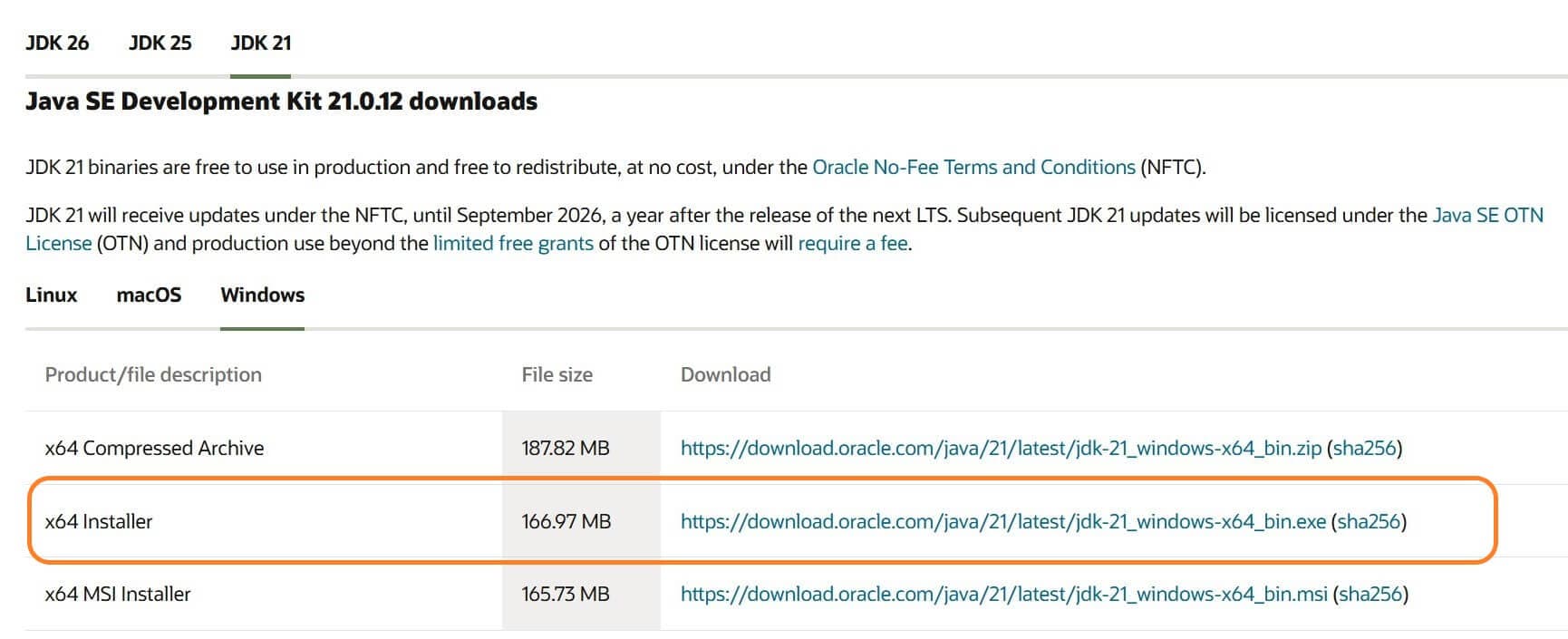
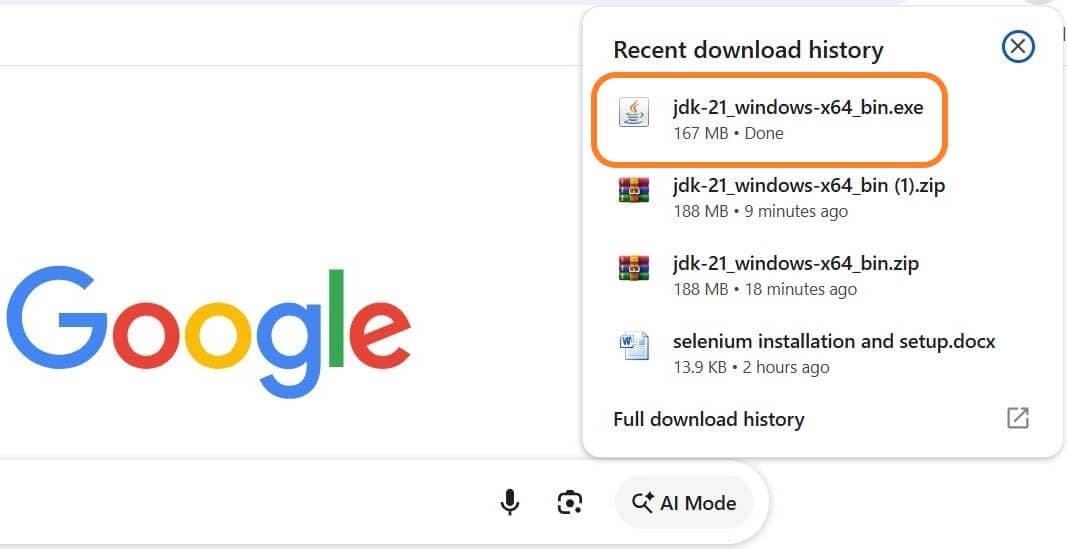
- Navigate to the folder where the file is downloaded. Click on the executable installer file to start the installation.
- Then, click on ‘Next.’
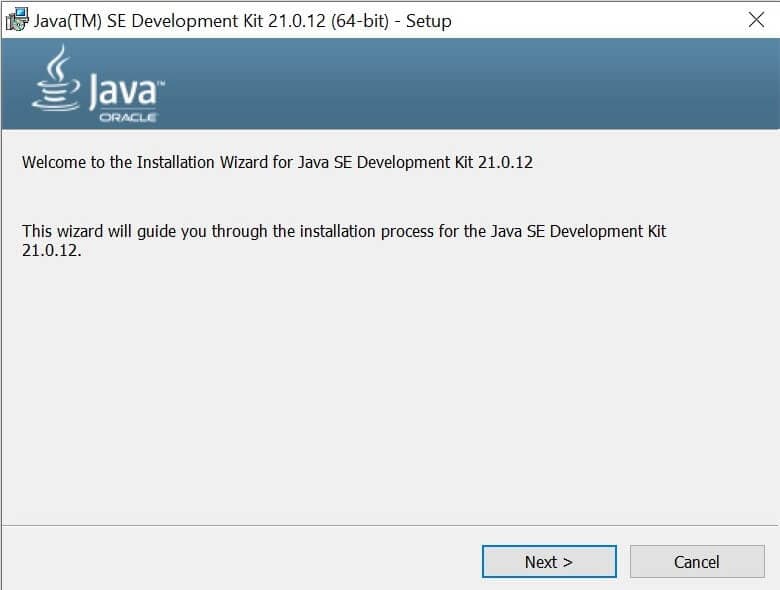
- The installation process starts as shown below.
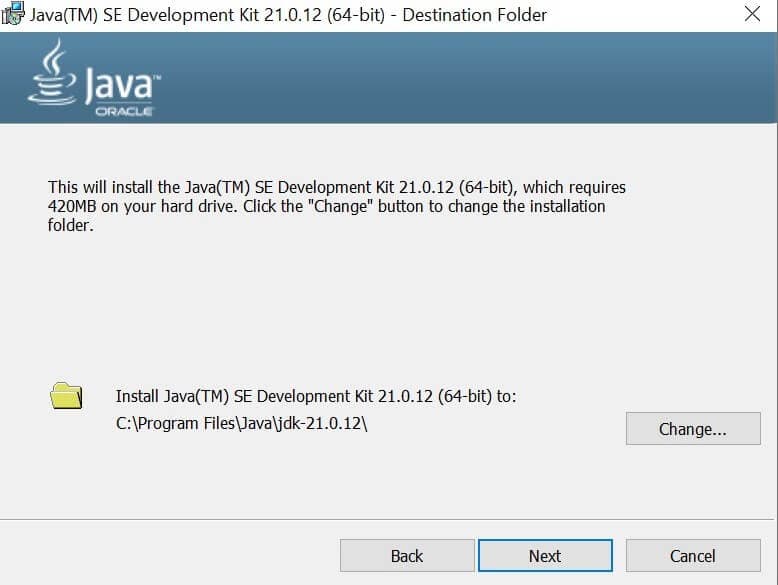
- Once the installation is finished, close the wizard.
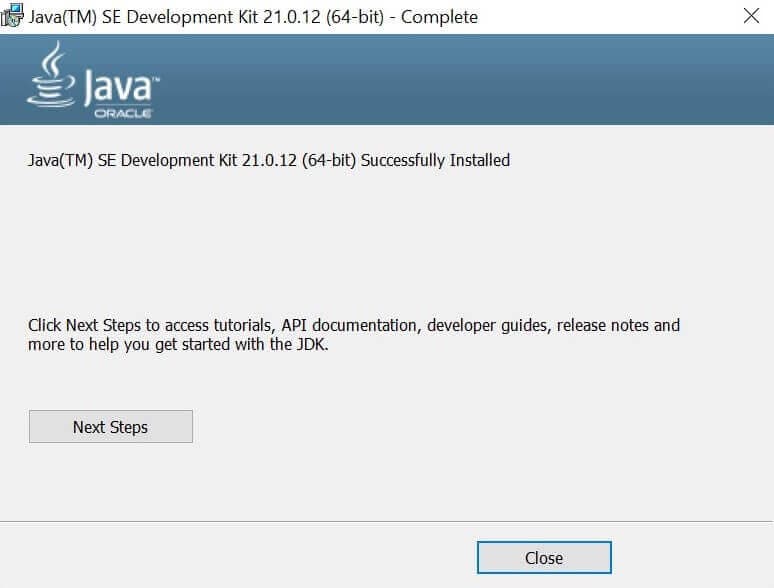
- Go to the bin folder for your JDK 21 directory on your system and copy its path as shown below:
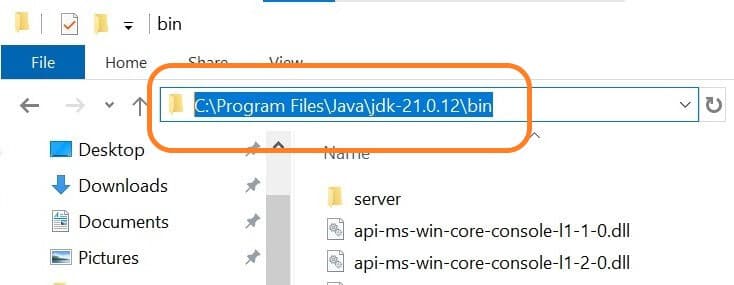
- Now, you have to set the PATH variable in your system environment.
- Open the Control Panel, then go to the Advanced system settings, and click on the ‘Environment Variables’ as shown below.
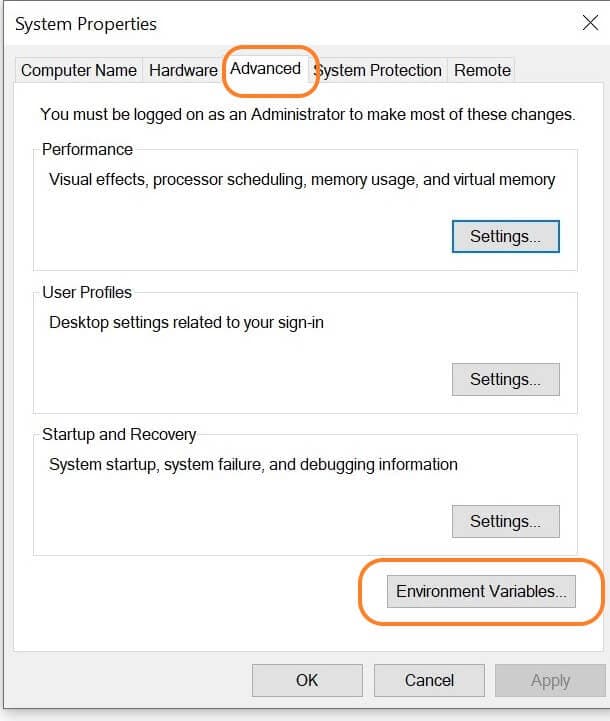
- Under System Variables, select the ‘Path’ variable and click on the ‘Edit’ button.
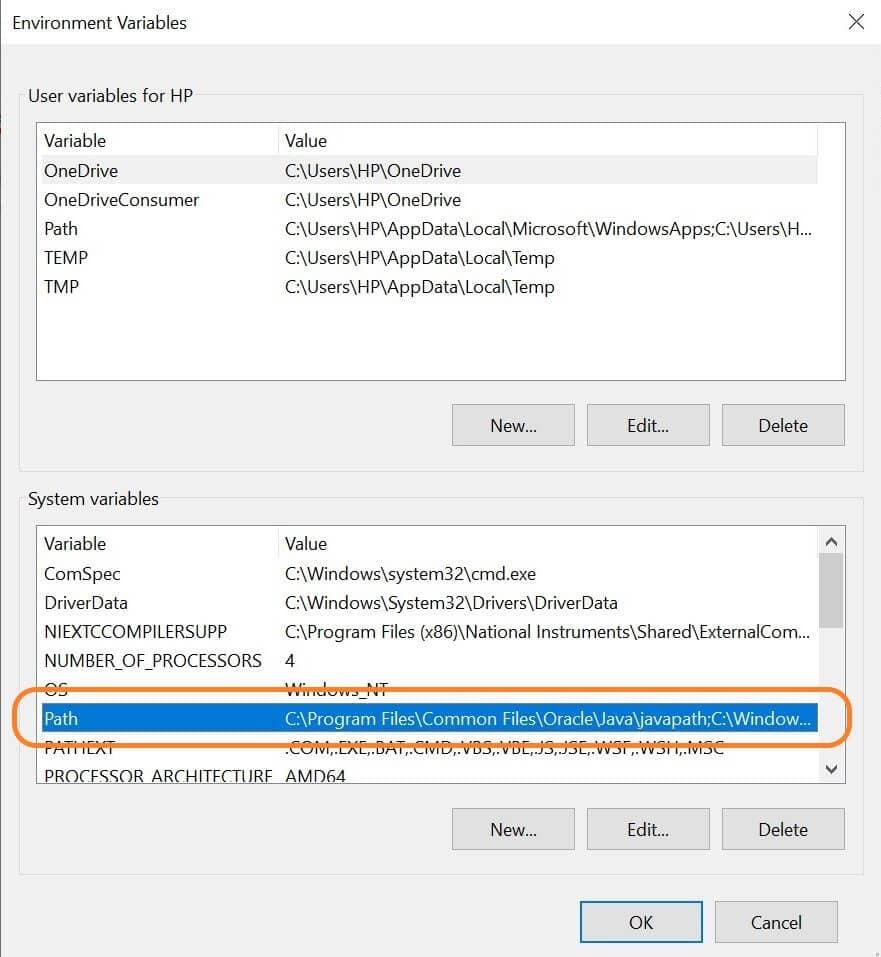
- To set the PATH variable on the system, click on the ‘New’ option and add the location of the bin folder of the JDK installation to the PATH variable in System Variables as demonstrated below:
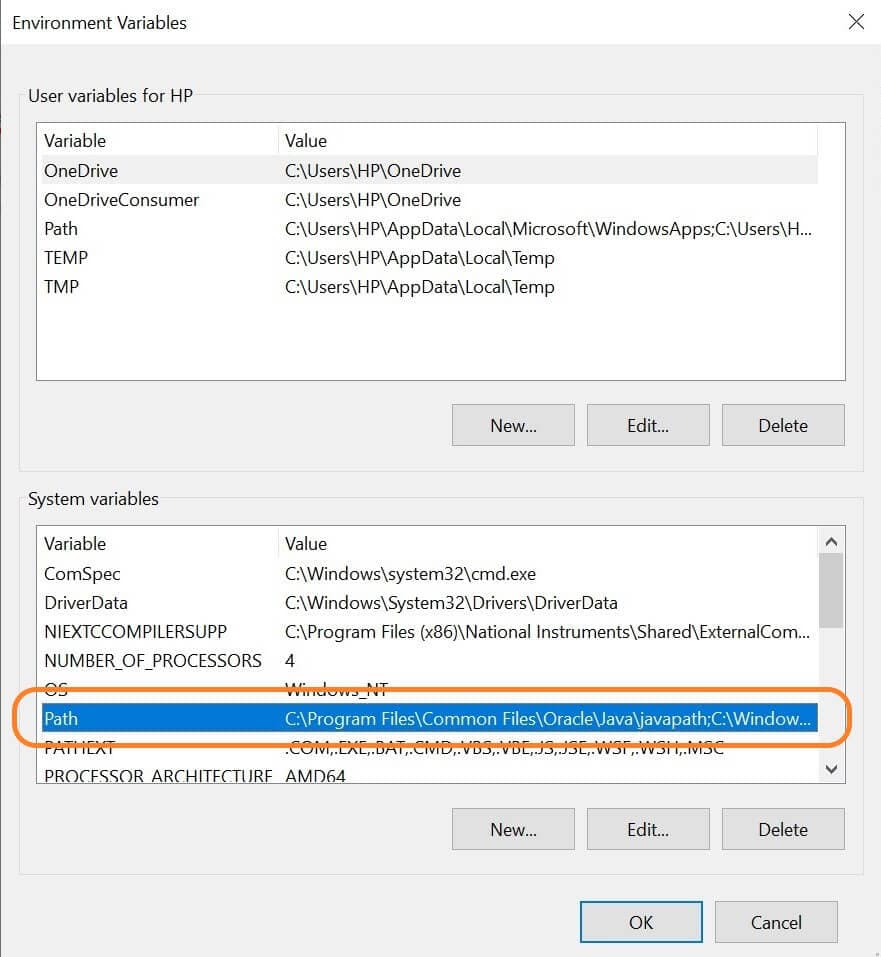
- Close the Advanced System Settings wizard.
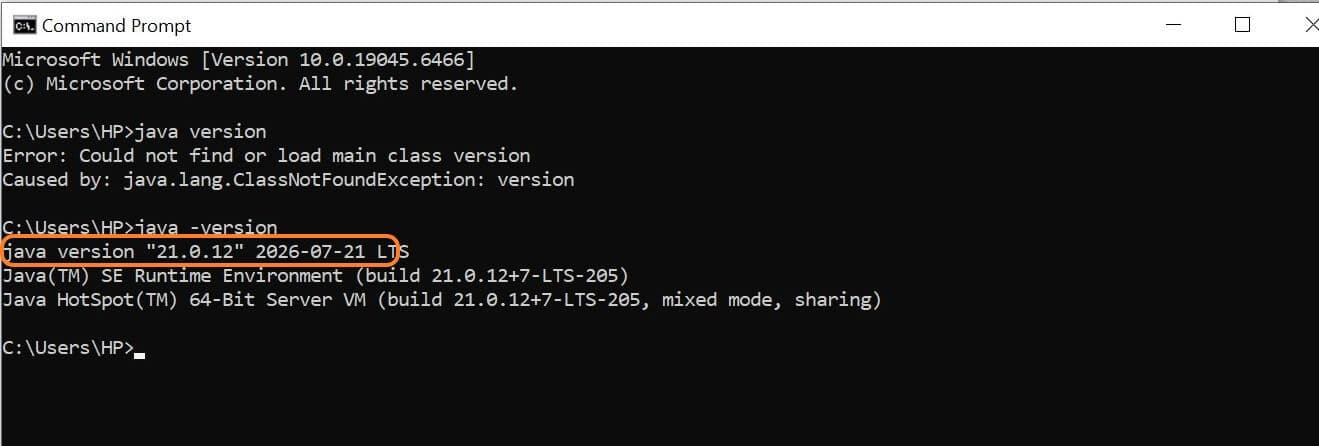
- Now, open the command prompt and run the command ‘java -version’ to verify the JDK installation on your Windows system as shown below.
Install Eclipse IDE for Selenium:
Let’s install Eclipse on your Windows system.
- First, you have to install the Eclipse IDE.
- Go to the official website at the link: https://www.eclipse.org/downloads/and
- Click on the ‘Download’ button as shown below.
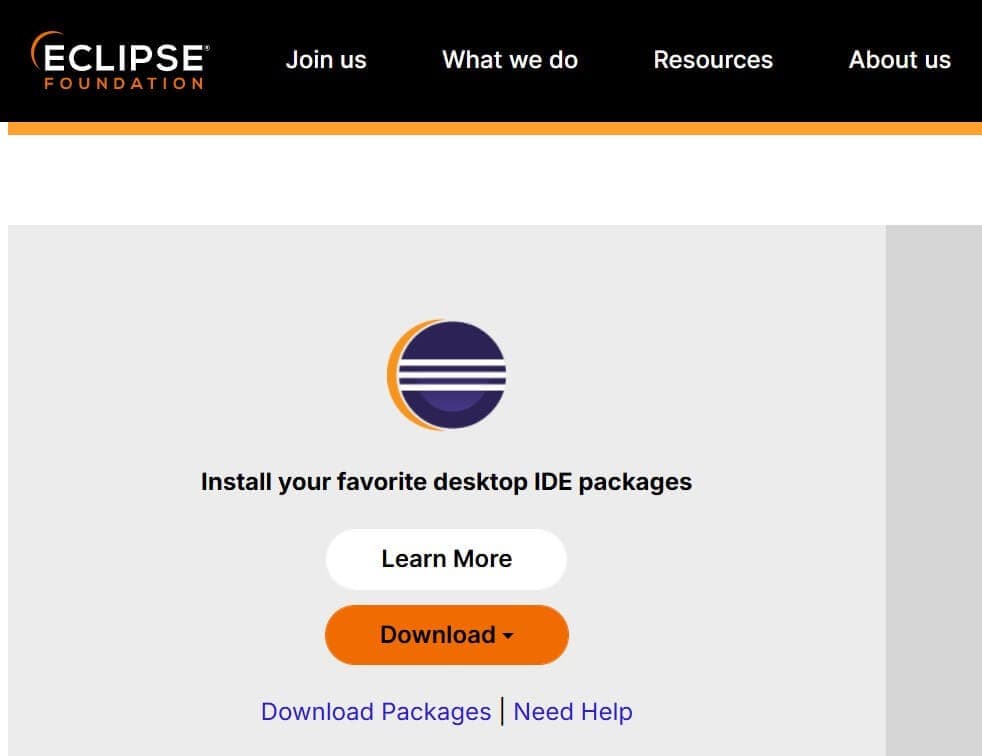
- Choose the ‘Select Another Mirror’ option and select the ‘Main eclipse.org downloads area’ option. After this, the setup file will be downloaded to your system.
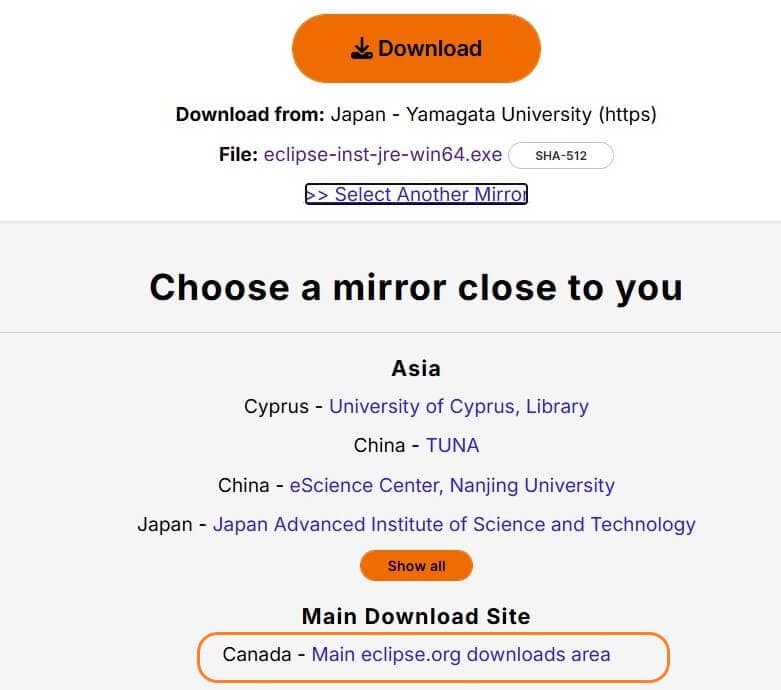
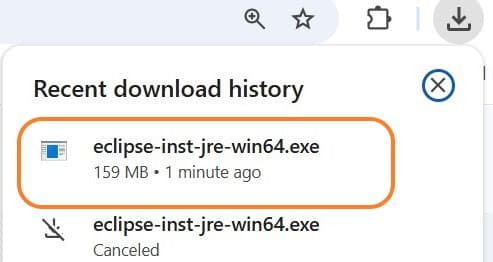
- Navigate to the folder where the setup file was downloaded, then click the file.
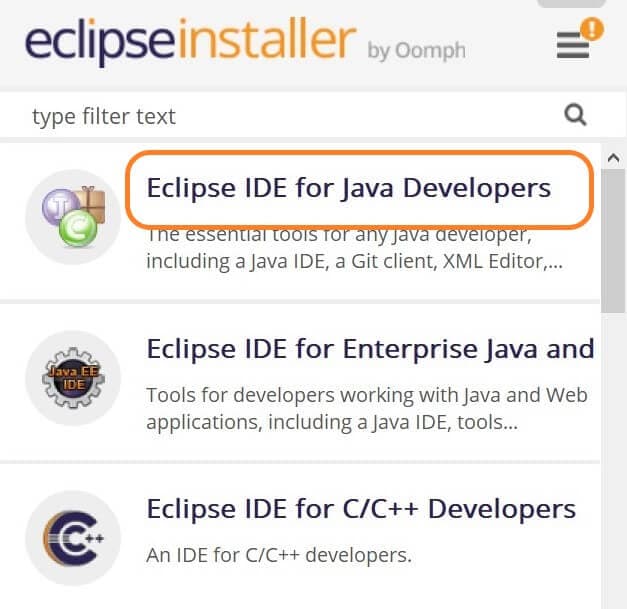
- The pop-up for the installation wizard appears as shown below. Choose the ‘Eclipse IDE for Java Developers’ as depicted below.
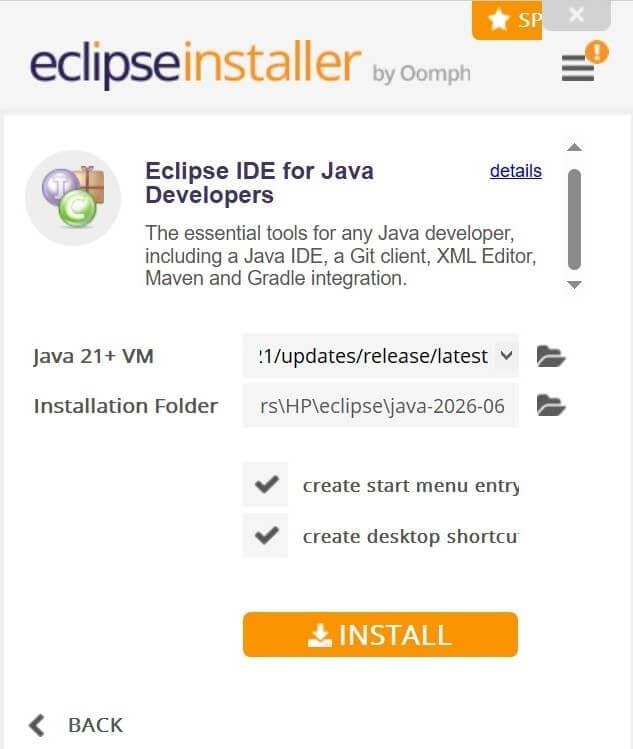
- Choose the folder location where you want to install the Eclipse IDE as shown below. After this, click on the Install button.
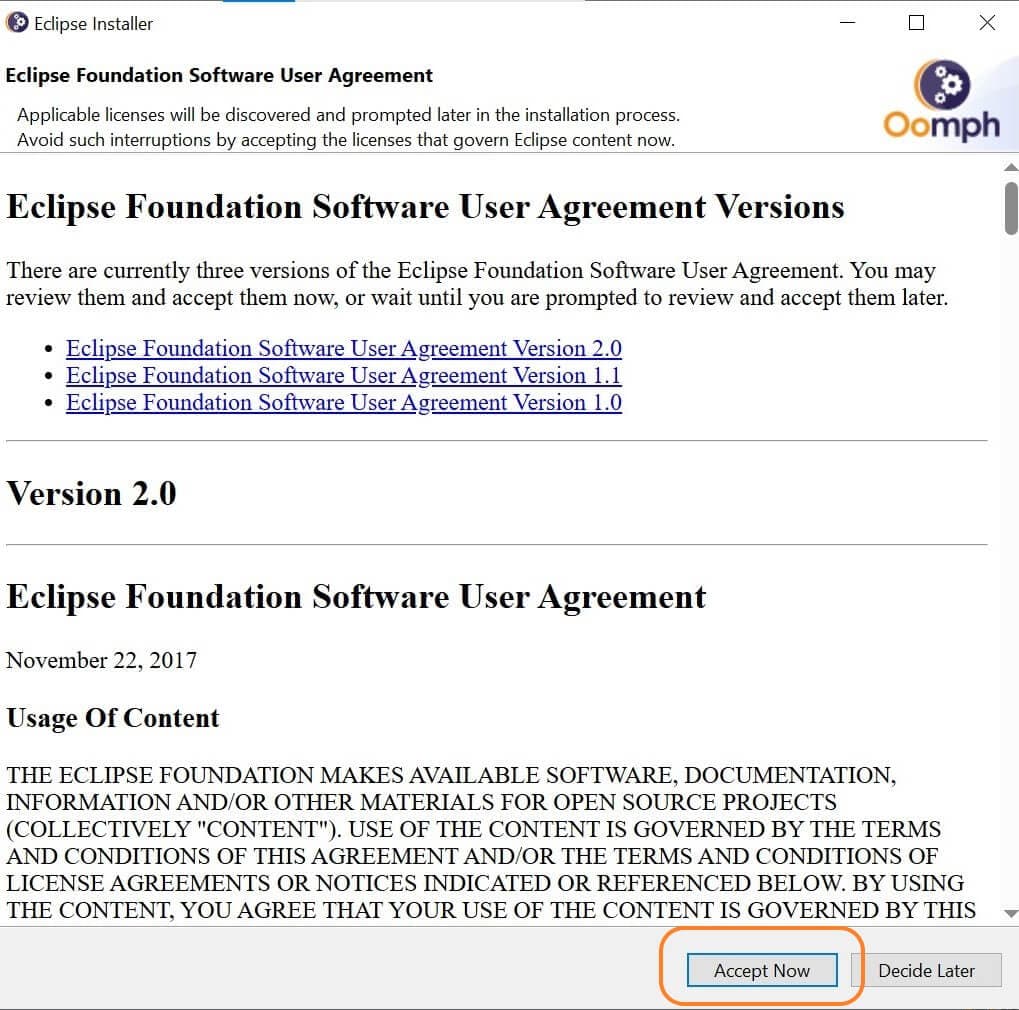
- After the installation is complete, the user agreement window will open; click the ‘Accept’ button at the bottom.
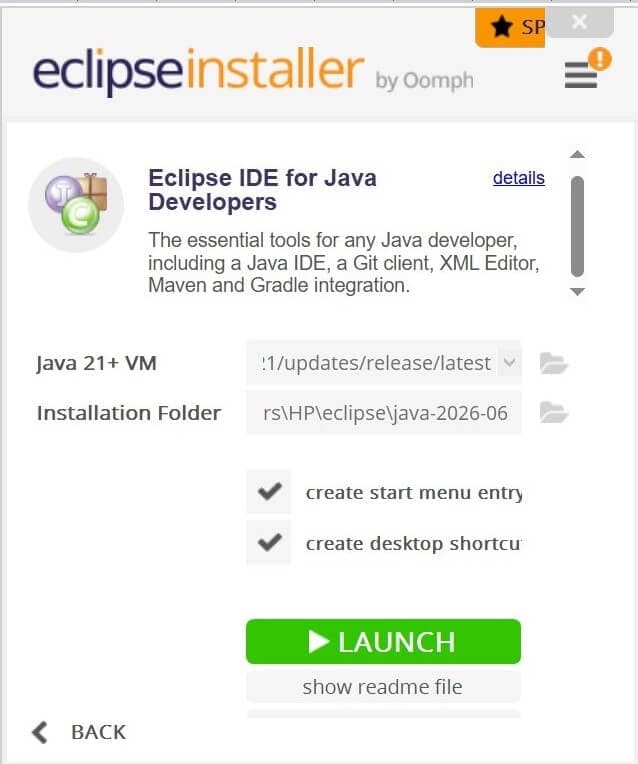
- You will get the option to launch the Eclipse IDE on your screen as shown below.
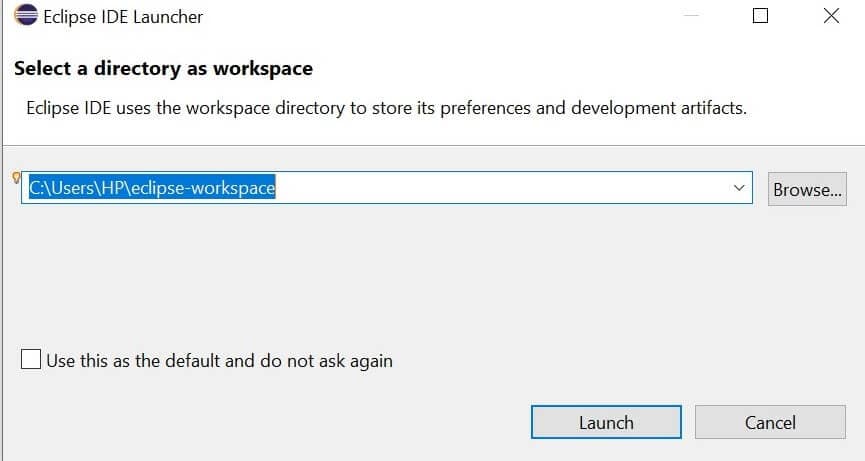
- Select the destination location where you want to launch the environment.
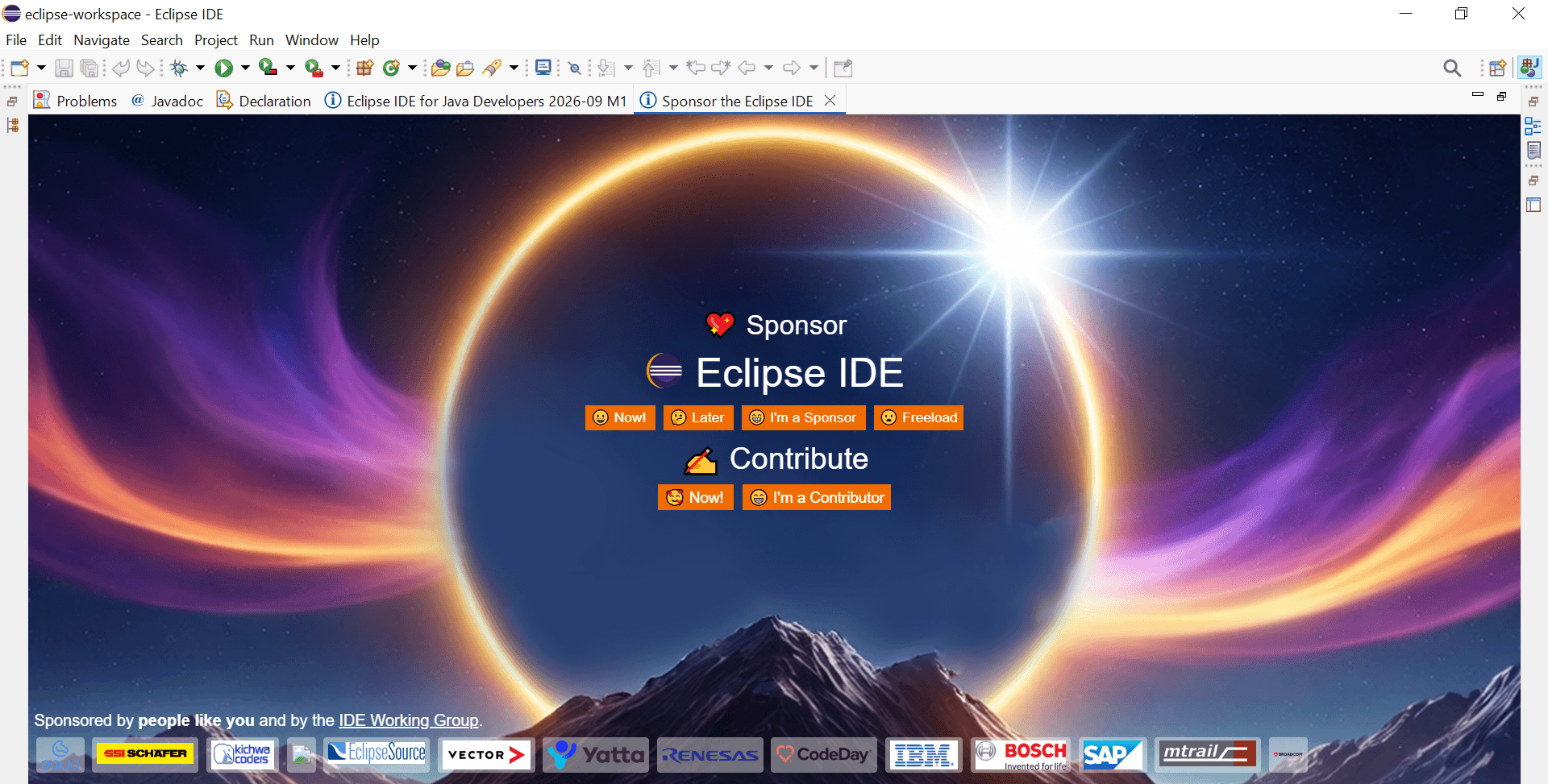
- The Eclipse IDE screen appears as demonstrated below.
After installing Eclipse on our system, let us install Selenium WebDriver on our Windows System.\
[ Check out Selenium Project Ideas For Beginners ]
Installing Selenium WebDriver on Windows:
- Go to the official website as shown below.
https://www.selenium.dev/downloads/ - Choose Selenium for Java as outlined below.
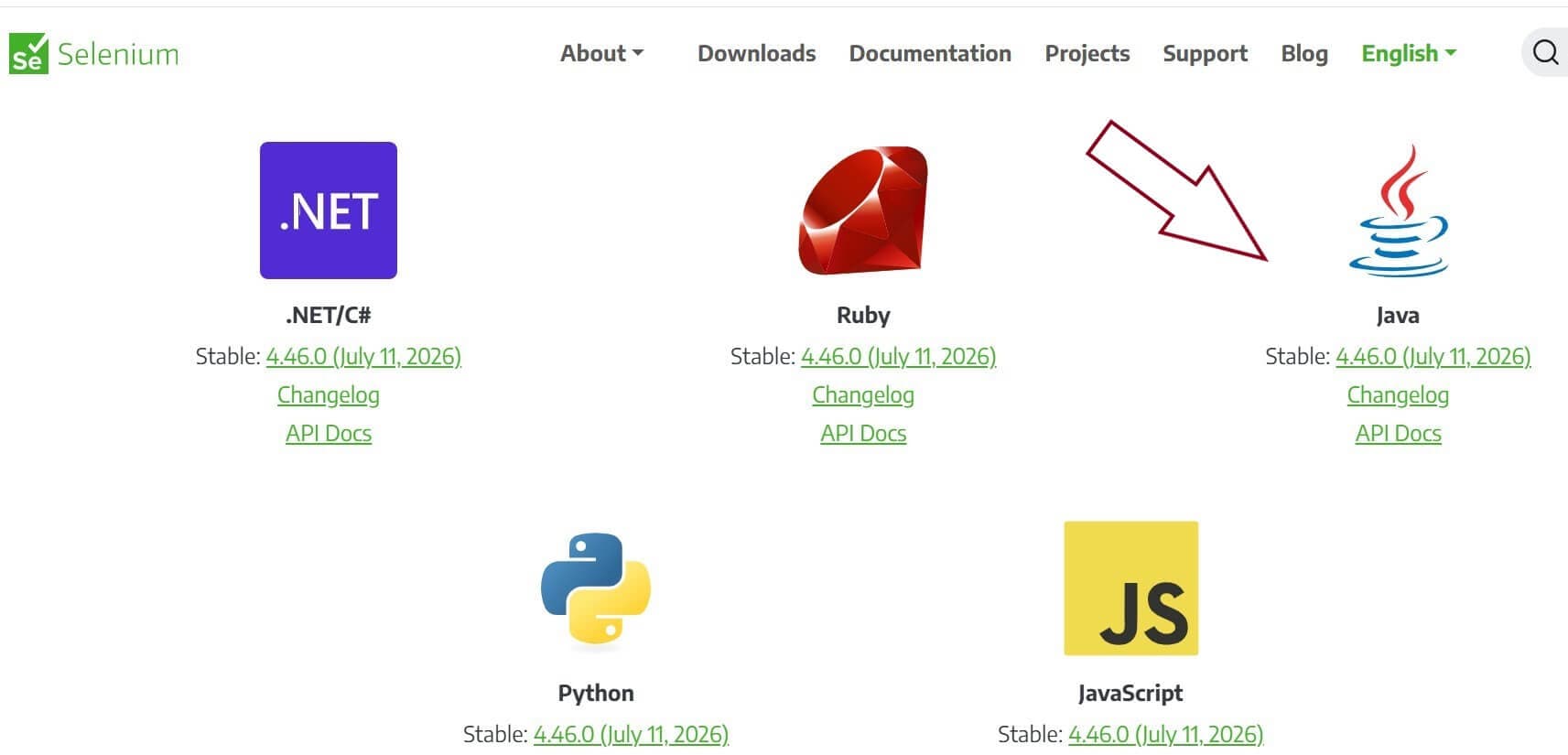
- Navigate to the folder where the zip file has been downloaded. Right-click on it and click on ‘Extract to selenium-java-4.46.0 '.
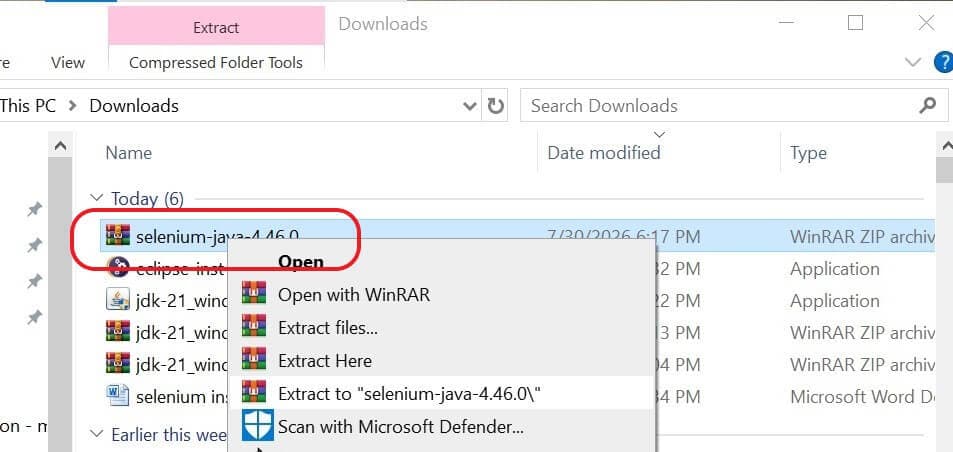
- The extracted files are shown below and contain the essential files.
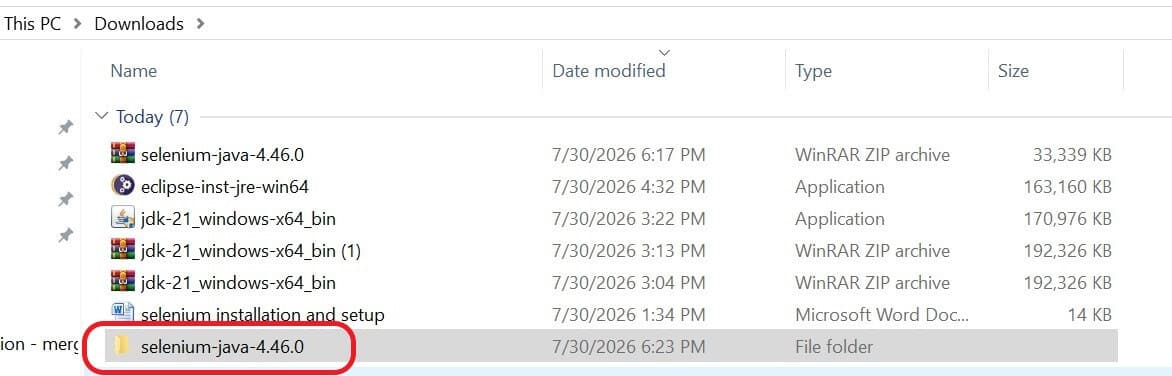
- Now, launch the Eclipse workspace in your preferred folder as shown below.
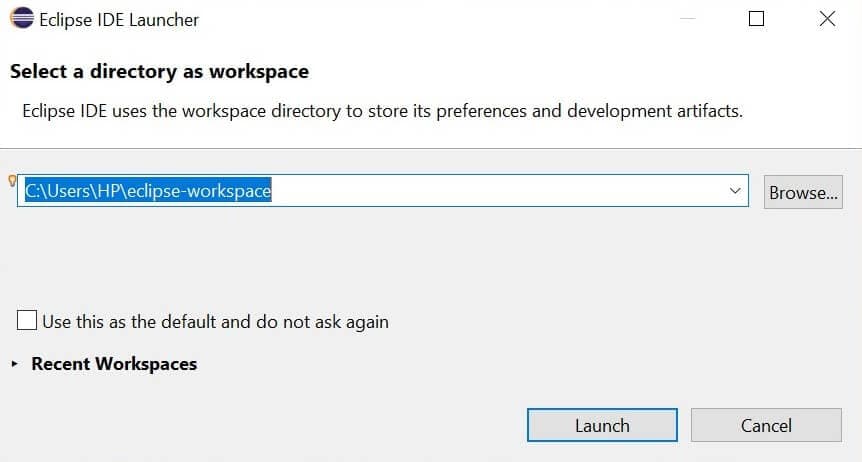
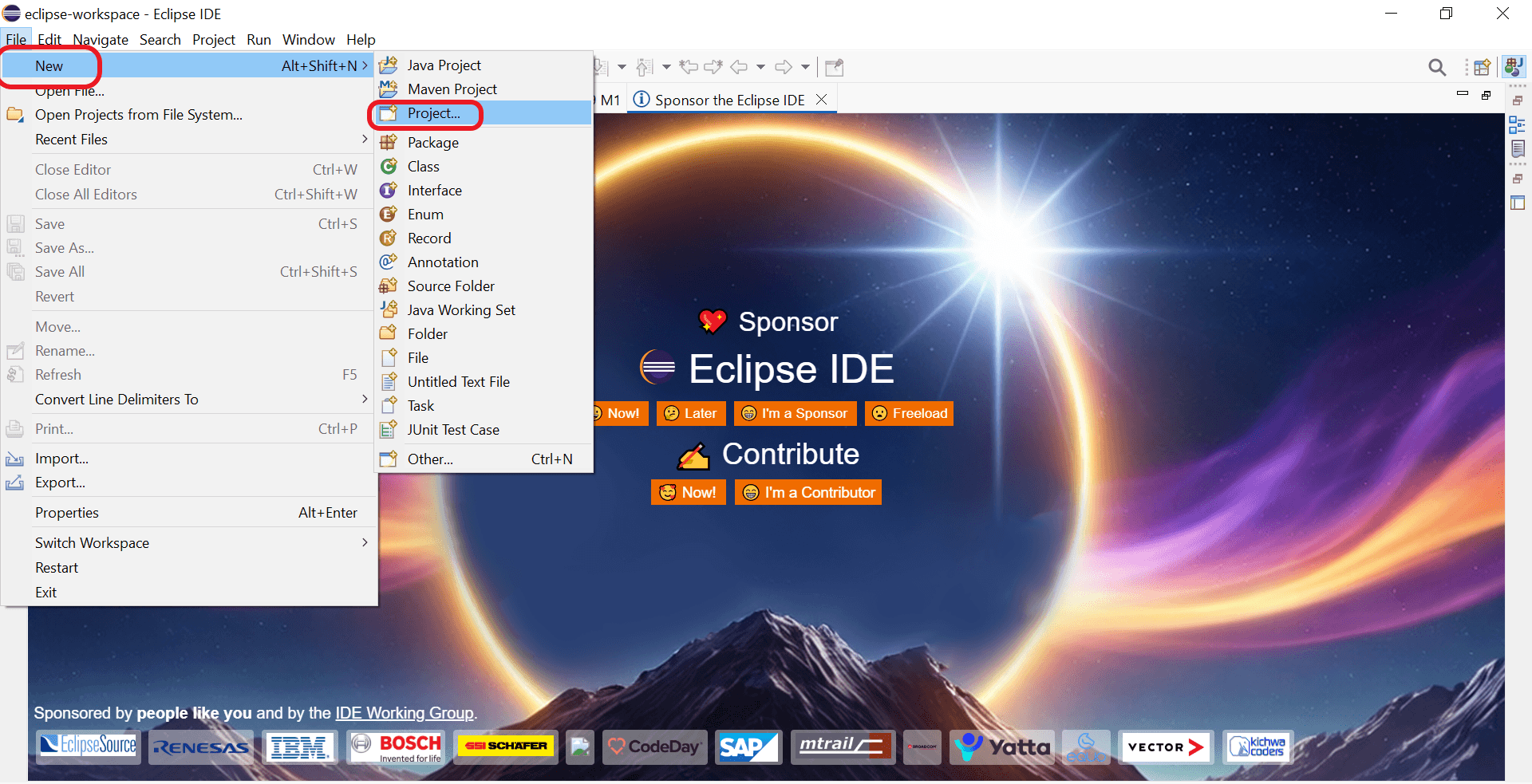
- Hover on the ‘New’ option under the ‘File’ menu. Then, select ‘Project.’
- Select the Project type as ‘Java Project’ and click ‘Next.’
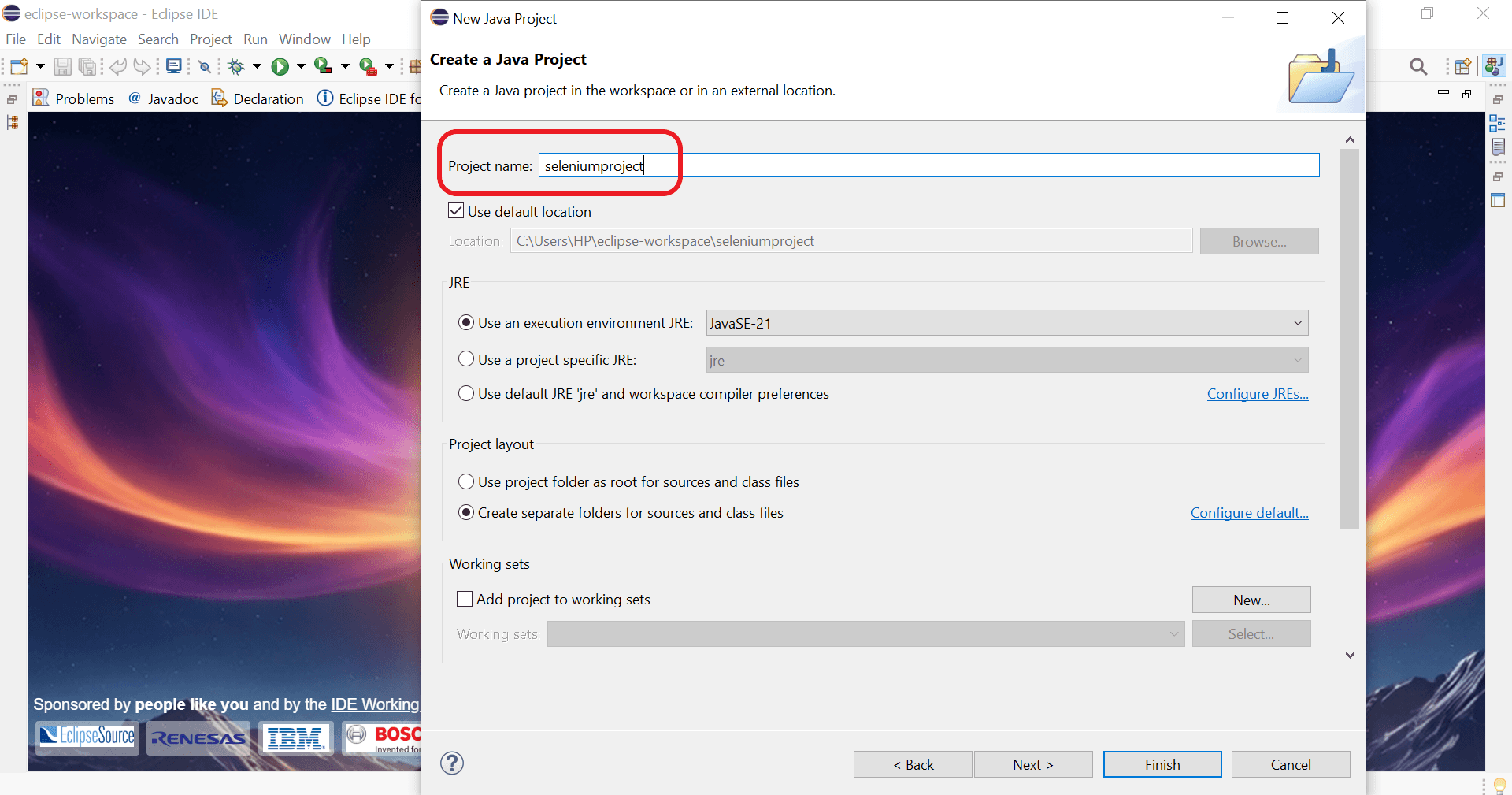
- Add the desired project name and keep the settings as default. Then, click on the ‘Finish’ button to continue.
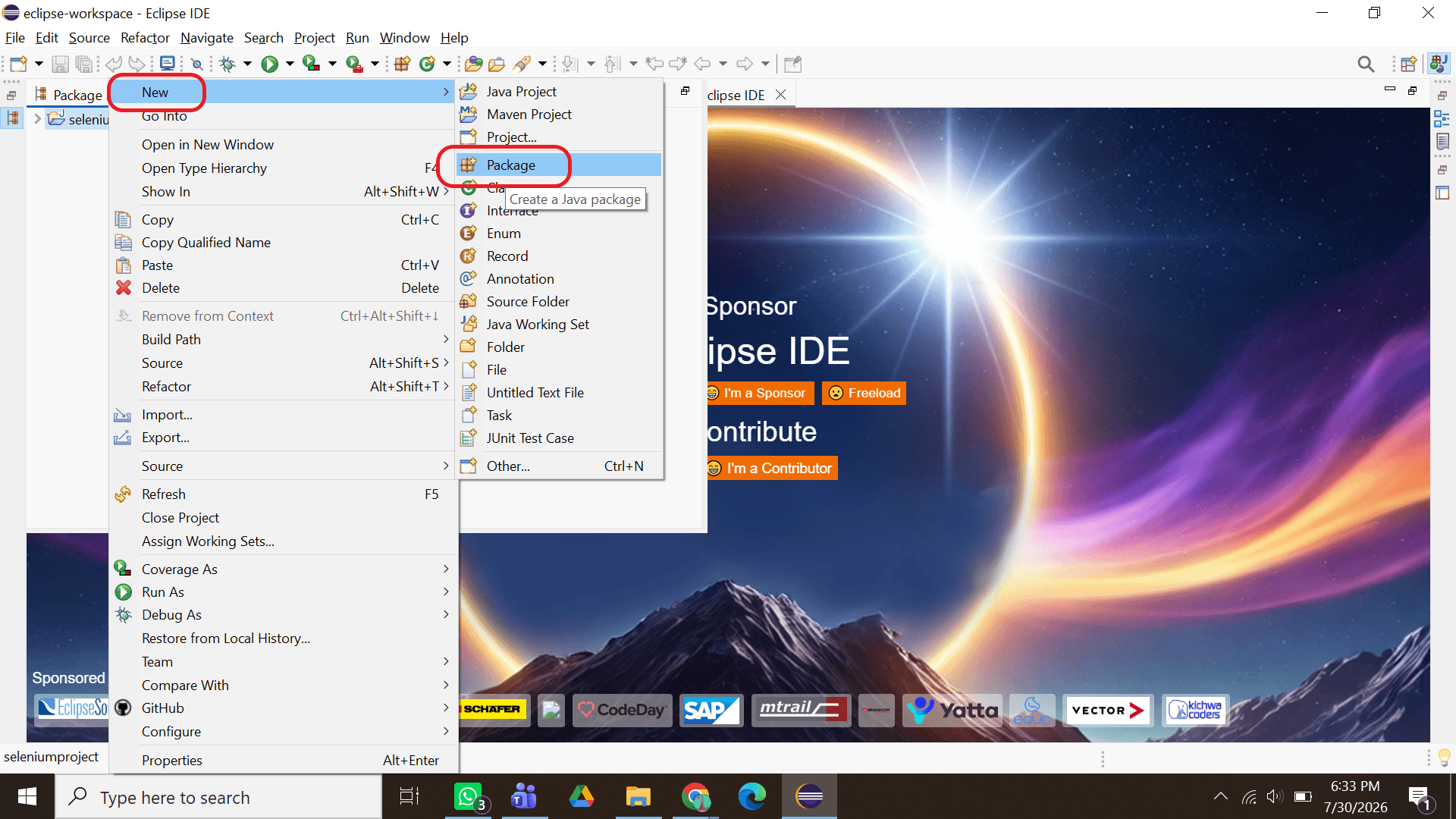
- Right-click on the newly created project to create a new package as shown below.
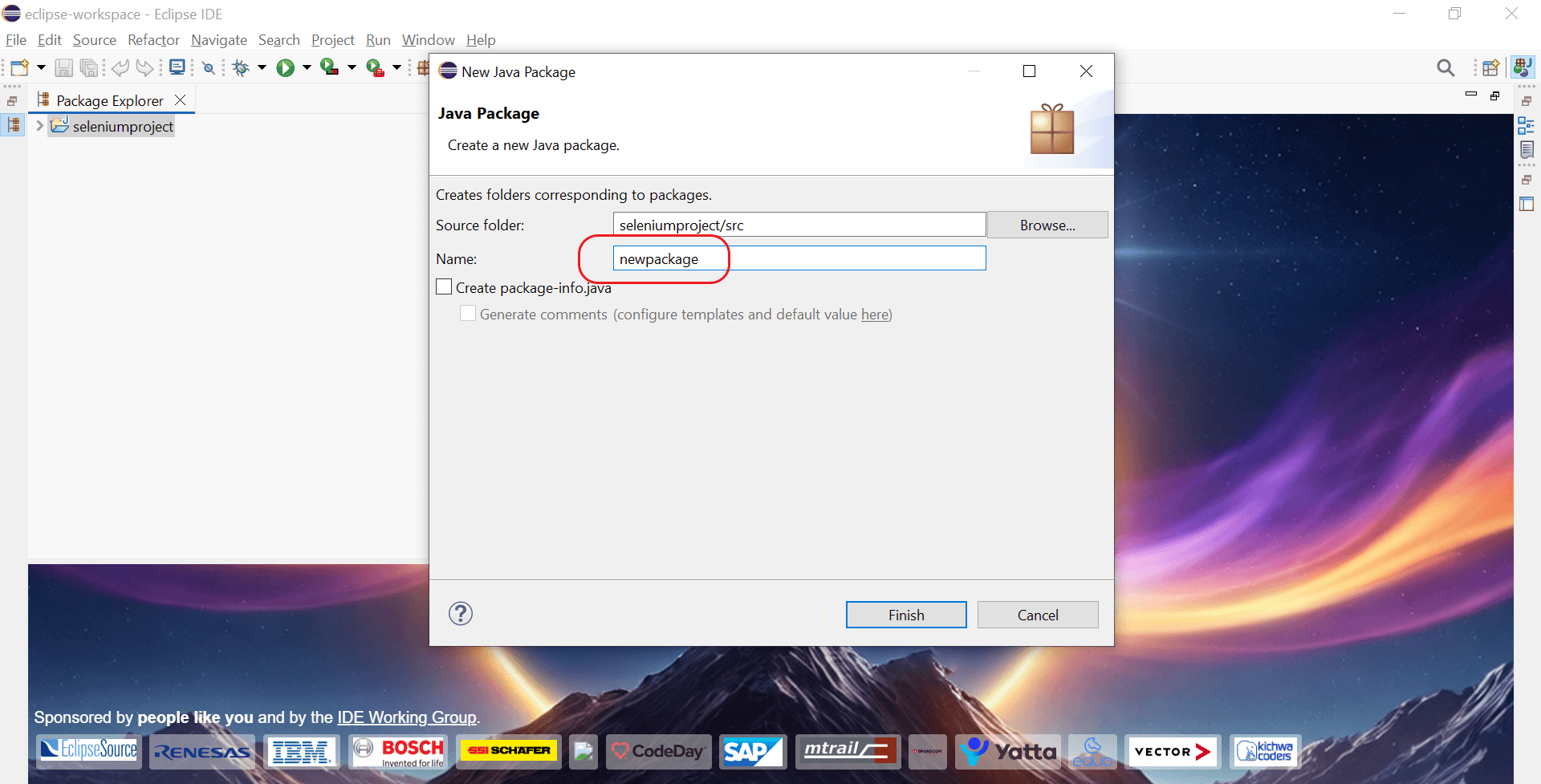
- Select the package name and continue by clicking on the ‘Finish’ button.
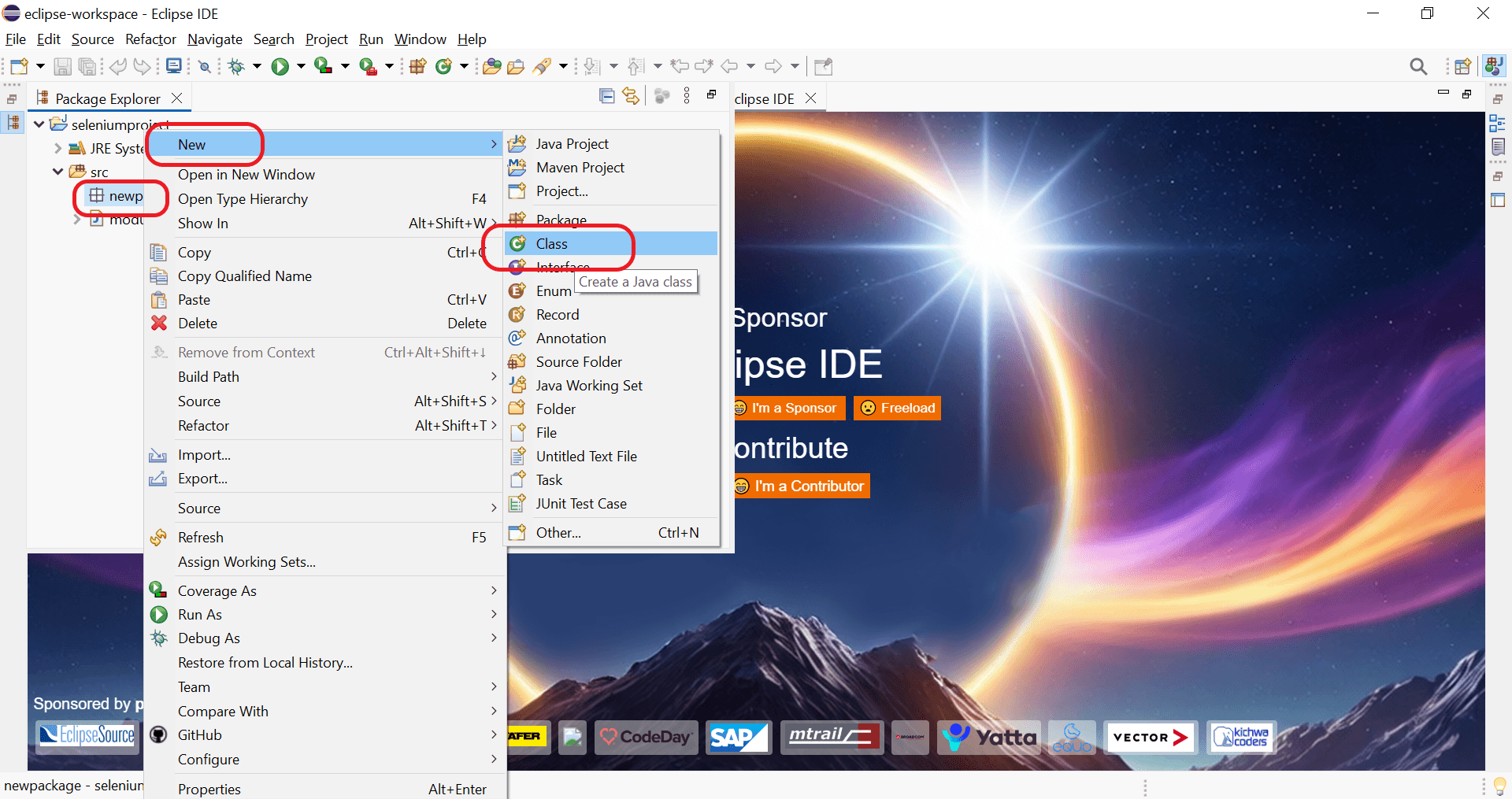
- Now, right-click the package we created in the previous step and select New > Class to create a new class, as shown.
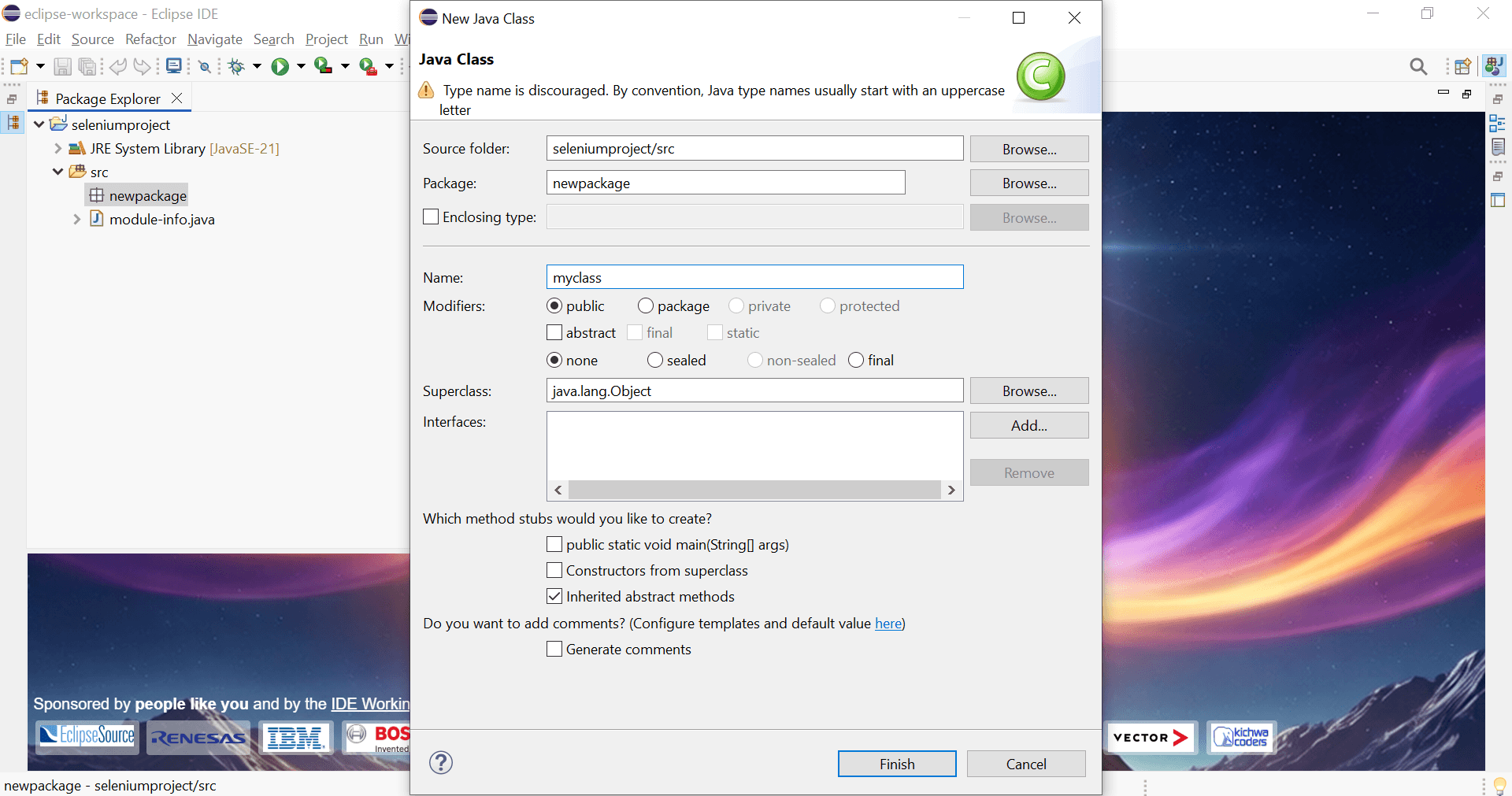
- In the pop-up shown below, specify the class name as you prefer. Then, click on the ‘Finish’ button.
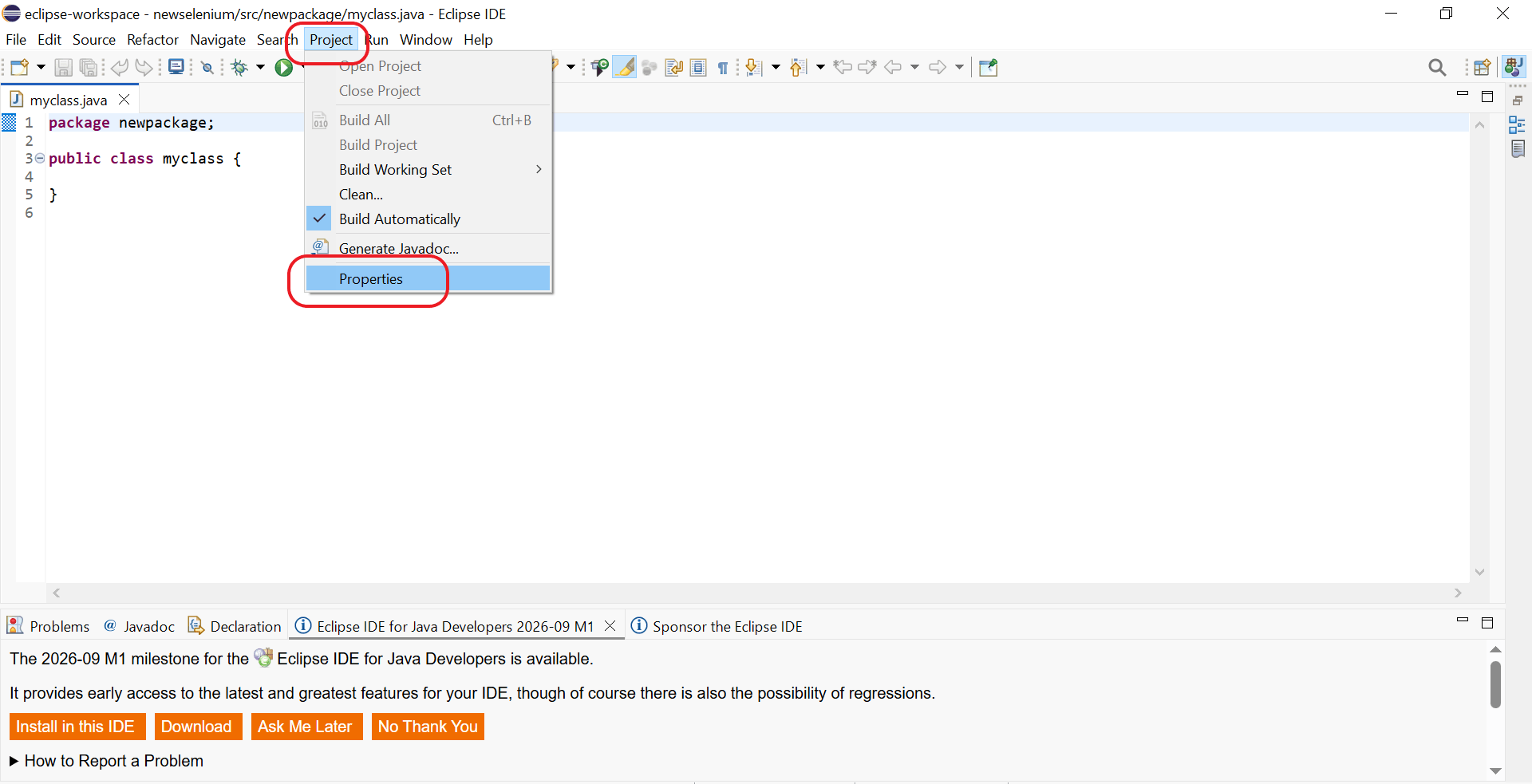
- Now, right-click on the Project and click on the ‘Properties’ option.
- The properties dialog box appears as shown below. Select the ‘Java Build Path’ option and then navigate to the ‘Libraries’ tab.
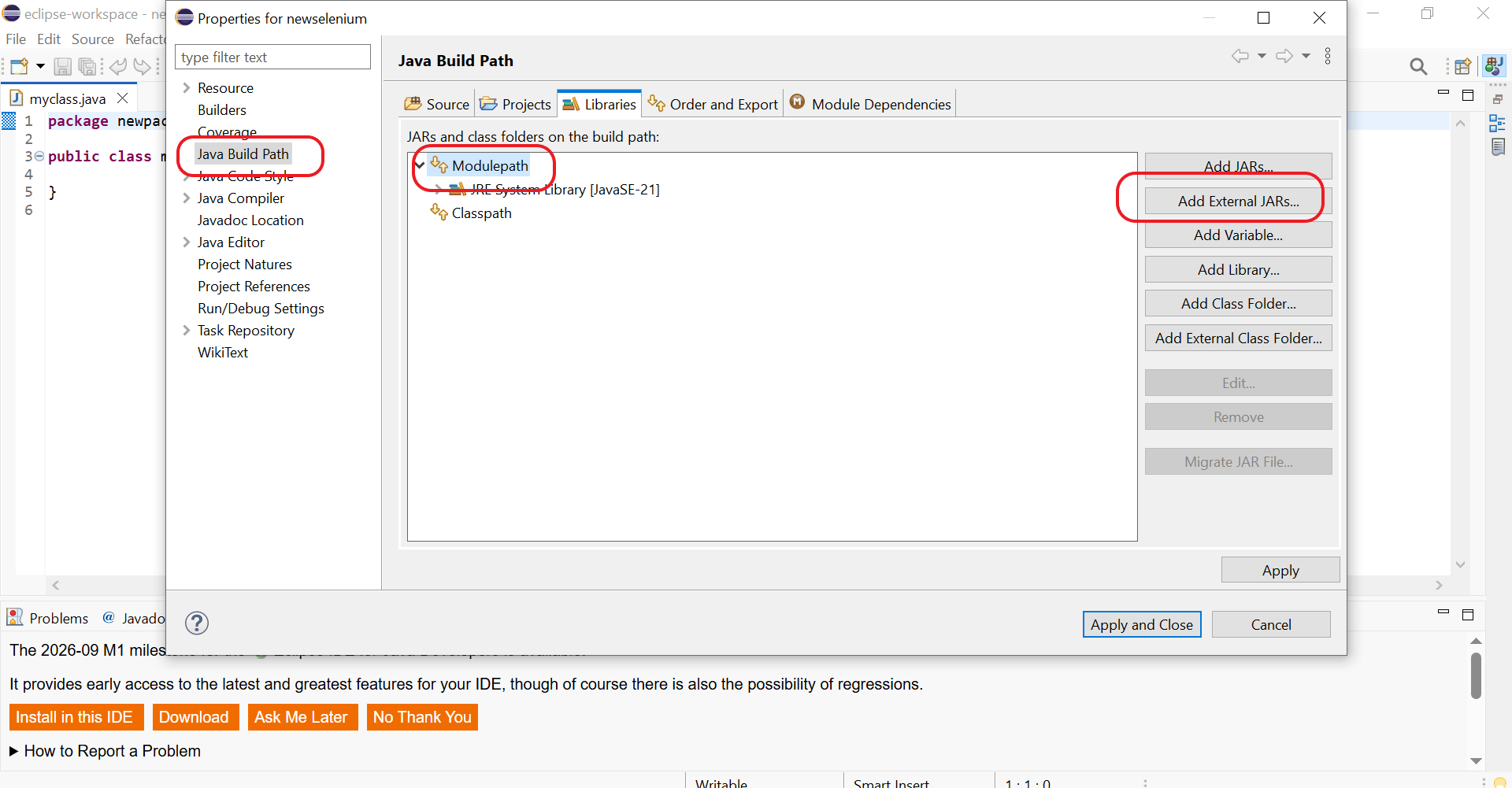
- Then press ‘CTRL+A’ to select all the files in the pop-up, as shown below.
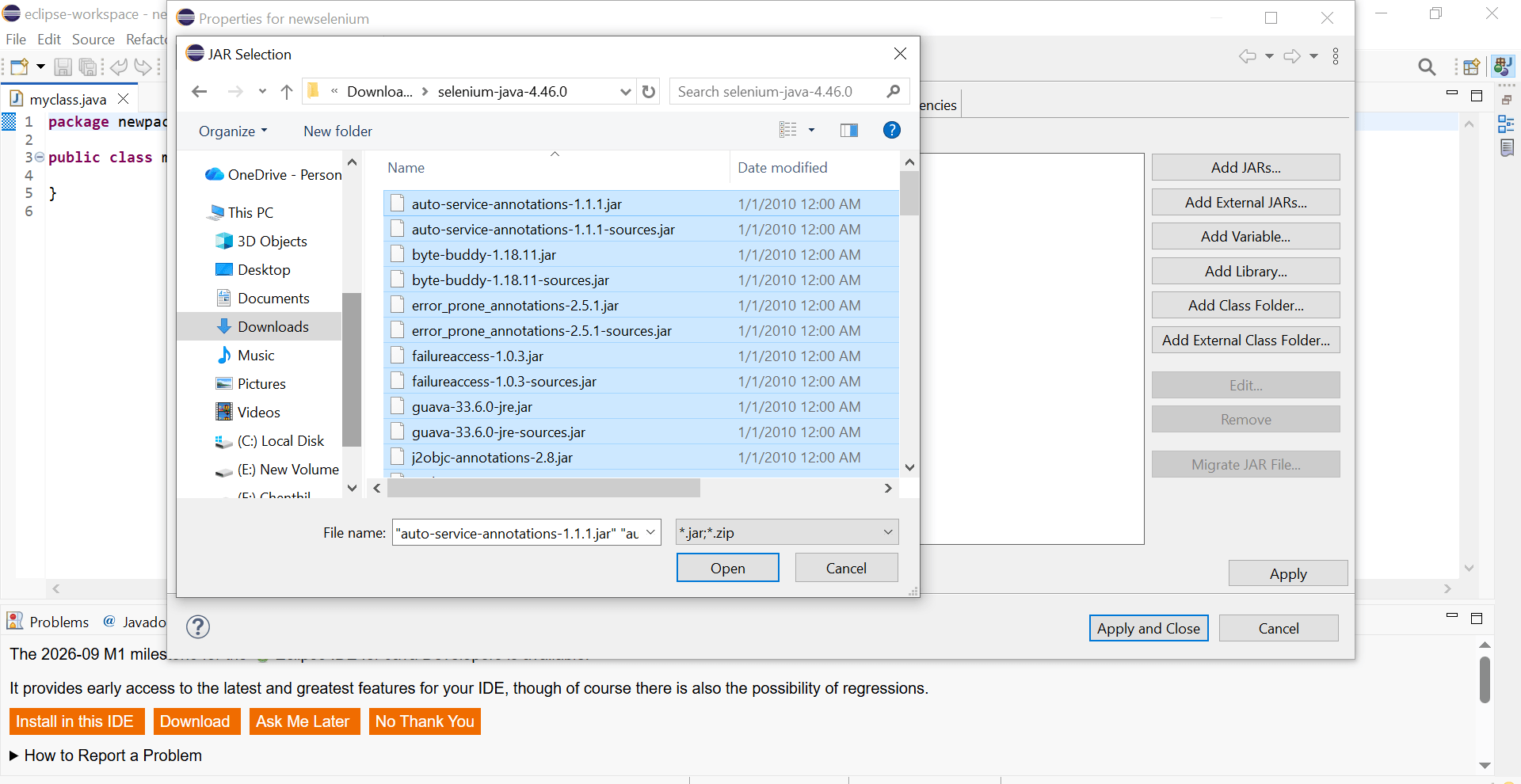
- Continue by clicking on the ‘Apply and Close’ button.
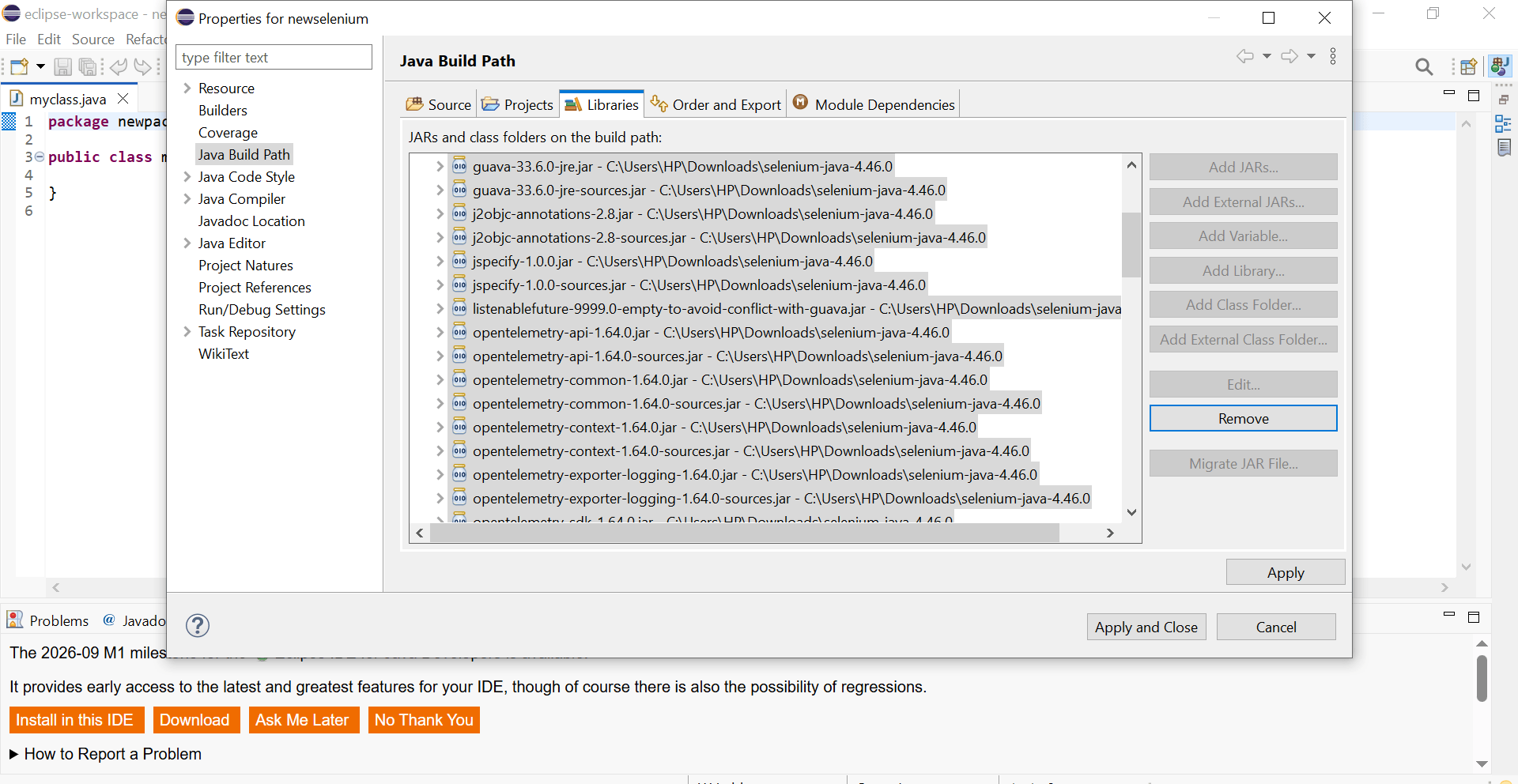
- The Selenium WebDriver Libraries are visible in the Project. You can now use them by importing them into the project and writing the test script.
We hope that this tutorial has helped you to learn how to install Selenium on your system.
[ Also Learn Selenium WebDriver Interview Questions ]
Installing Selenium with the Python Package:
You can use the selenium package to automate web browser interactions from Python. The supported Python version is 3.10+, and supported browsers are Chrome, Edge, Firefox, Safari, and more.
The command below can be used to install and upgrade the Python bindings.
pip install -U seleniumYou need to use a driver to interface Selenium with browsers. You can use Selenium Manager for this interface, as it supports many platforms and browsers.
Docker-Selenium Grid Setup
You can use Docker to quickly set up Selenium Grid. That’s because the Selenium Docker images include all components, including Grid Hub and Chrome, Edge, and Firefox browser nodes, enabling easy management.
You can use Docker Compose to start a basic Selenium Grid.
options.addArguments(" -- headless=new");
options.addArguments(" -- window-size=1920,1080");
options.addArguments(" -- disable-dev-shm-usage");
options.addArguments(" -- no-sandbox");
The command below starts the grid.
docker-compose up -dHeadless Browser Setup:
Headless mode allows browsers to operate without a graphical user interface (GUI). It simplifies working with CI/CD pipelines, Docker containers, and cloud-based test execution. It speeds up execution, reduces resource consumption, and enables automated testing on servers without a desktop environment.
- Chrome's new headless mode works differently from the old headless mode.
- Firefox also offers native headless execution without needing extra software.
- When running Selenium tests in Docker, GitHub Actions, GitLab CI, Jenkins, or other CI/CD platforms, consider adding the following Chrome options for better stability:
options.addArguments(" -- headless=new");
options.addArguments(" -- window-size=1920,1080");
options.addArguments(" -- disable-dev-shm-usage");
options.addArguments(" -- no-sandbox");
[ Check out Selenium Interview Questions and Answers ]
Frequently Asked Questions
1) Do I need to install ChromeDriver separately for Selenium 4?
Ans: No, you don’t need to install ChromeDriver separately for Selenium 4. That’s because Selenium Manager can automatically download, manage, and update the right browser driver for your browser.
2) Which is the latest version of Selenium?
Ans: As of July 2026, the latest stable version of Selenium is 4.46.0. It was released on July 11, 2026.
3) How can I install Selenium in Python?
Ans:
- First, install Python
- Then, install Selenium
- Verify the installation
- Install a browser
- Check the Selenium version
4) Is Firebug still available?
Ans: No. Firebug is no longer available. Rather, you can use browser DevTools. However, DevTools will be replaced by BiDirectional webdriver (BiDi) in the upcoming Selenium 5 series. This BiDi will offer parity across browsers for the network, script, log, and input modules.
5) Does Selenium support Internet Explorer?
Ans: No, Selenium no longer supports Internet Explorer, as Microsoft has deprecated the browser and now uses Edge instead.
6) When should I choose the Selenium Grid for Test Cases?
Ans: Selenium Grid is used for concurrent testing of applications. It means you use it to run parallel tests across multiple machines and browsers. This feature is very useful for saving time that would otherwise be spent separately testing the application across different browsers.
7) What is BiDirectional Functionality in Selenium WebDriver?
Ans: Selenium BiDirectional Functionality is a new feature that allows users to implement advanced actions, such as executing JavaScript commands, intercepting network requests, and handling browser events in real time. It provides a cross-browser API for testing user interaction in web browsers.
8) What is Selenium IDE?
Ans: It is a browser extension that records the user’s actions in the browser according to the specified parameters using existing Selenium commands. It is used for invoking record and playback features in Selenium.
9) How to run Selenium from the command line using the Java Client?
Ans: You can use the package ‘org.openqa.selenium.cli’ to configure and run Selenium using the command line interface. It provides various classes and interfaces such as ‘CliCommand,’ ‘CliCommand.Executable,’ and ‘WrappedPrintWriter’ for this purpose.
10) What is a Locator in Selenium WebDriver?
Ans: We can use locators to identify elements in the DOM (Document Object Model). Selenium provides various locators, such as ID Locator, Name Locator, Class Name Locator, Tag Name Locator, Link Text Locator, Partial Link Text Locator, XPath Locator, CSS Selector, and XPath with Index Locator, to find elements on a webpage.
Conclusion:
Selenium has proven to be a wonderful tool for automating the testing of browser-based applications. It provides a standard API along with Drivers, frameworks, and external libraries. We can run the specific browser drivers available in Selenium on the same system to simulate user interactions.
It simplifies browser automation testing, enabling rapidly changing web-based technologies to be easily adapted for development. After successfully installing Selenium on our system, we can easily write test scripts for web browsers.
 On-Job Support Service
Online Work Support for your on-job roles.

Our work-support plans provide precise options as per your project tasks. Whether you are a newbie or an experienced professional seeking assistance in completing project tasks, we are here with the following plans to meet your custom needs:
- Pay Per Hour
- Pay Per Week
- Monthly
| Name | Dates | |
|---|---|---|
| Selenium Training | Oct 20 to Nov 04 | View Details |
| Selenium Training | Oct 24 to Nov 08 | View Details |
| Selenium Training | Oct 27 to Nov 11 | View Details |
| Selenium Training | Oct 31 to Nov 15 | View Details |

Viswanath is a passionate content writer of Mindmajix. He has expertise in Trending Domains like Data Science, Artificial Intelligence, Machine Learning, Blockchain, etc. His articles help the learners to get insights about the Domain. You can reach him on Linkedin